




Angela Gramadă: The European Agenda Must Not Be Monopolised by a Single Political Party

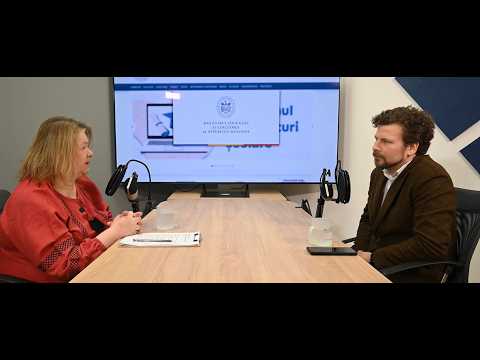
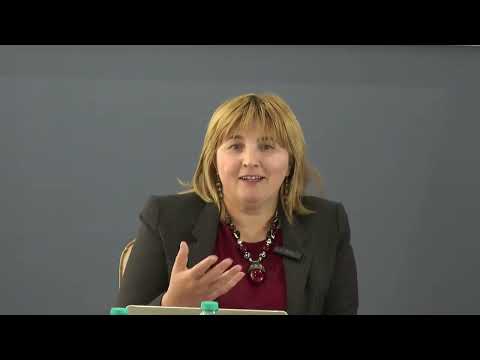
Angela Gramadă, Director of the Experts for Security and Global Affairs (ESGA) think tank, spoke with FES/APE Foreign Policy Bulletin about the strong political signals that Brussels has sent to the Republic of Moldova and the challenges that will shape the next stage of the country’s European integration process. Beyond the recognition that Chișinău currently enjoys at the Euro pean level, the real test of accession lies in the consistent implementation of reforms in key areas such as the judiciary, local public administration, anti-corruption, public communication, and the government’s ability to build broad political and societal consensus.
In the interview, the expert explains why the messages of appreciation from European leaders should be understood, first and foremost, as a signal of political support in a complex regional environment, where actors continue to seek to undermine Moldova’s European path. We invite you to read the full interview.
How do you interpret the messages from European leaders, who have praised the reforms implemented in Chișinău, the political will demonstrated by the authorities, and the fact that the Republic of Moldova has already fulfilled 93% of the measures set out in the Growth Plan? Beyond these encouraging signals and the financial support announced by the European Union, what do you see as the main areas in which Moldova still needs to make further progress in order to consolidate its European path?
As expected, first and foremost, it was a political message and a message of support. In the current regional context, this signal is extremely important because, despite the referendum and the outcome of the parliamentary elections, there are still actors who seek to cast doubt on the achievements that the Republic of Moldova has attained through considerable effort. After all, the formal opening of accession negotiations with the European Union is not something that comes easily. That is why the first thing we should appreciate is this political signal.
Secondly, it is important that the European Union has chosen not to make Moldova’s European path conditional on its relationship with the Russian Federation. In other words, Brussels is not waiting for a signal from Moscow before deciding whether to continue its dialogue with Chișinău on European integration. Does the Republic of Moldova have the political will to join the European Union? Yes. Do the European institutions have the political will to respond positively to that choice? They do.
We should therefore recognize the efforts made by both Chișinău and Brussels and continue moving forward, regardless of attempts by various actors to divert Moldova from its objective of joining the European Union.
As for the work that still lies ahead, it is enough to look at the platform that monitors Moldova’s progress across the six negotiating clusters. It clearly shows that significant work remains in several key areas.
Judicial reform remains one of the most challenging chapters. Fiscal reform also requires considerable effort, while anti-corruption measures will continue to be among the country’s main challenges in the coming years. In addition, numerous technical chapters still need to be adapted to Moldova’s specific realities and needs. The EU acquis has already been adopted by the European Union; Moldova’s task is to negotiate implementation arrangements and timelines that best reflect its national interests. In some areas, transitional periods will be necessary to ensure that European legislation is properly understood and effectively implemented.
Some of these chapters will not pose challenges only domestically; they will also require complex dialogue with neighbouring countries. Environmental policy is one such example. Moldova still faces a significant gap compared with EU Member States, while at the same time it must address a number of environmental issues together with Ukraine. As a result, this chapter will require sustained political and diplomatic efforts to identify mutually acceptable solutions and to prevent sensitive bilateral issues from slowing down the accession process.
At present, foreign policy is the most advanced chapter. There is relatively little EU legislation left to transpose and implement, suggesting that this cluster is likely to progress more rapidly than others.
That said, challenges will remain. Some Member States may argue that Moldova benefits from Romania’s consistent support and from having a strong advocate for its interests within the European Union, giving it access to opportunities that previous candidate countries did not enjoy. Such perceptions may fuel arguments about an uneven playing field. Nevertheless, the Republic of Moldova should not allow itself to be discouraged by such narratives and must continue to pursue its European path with consistency and determination.
The Lack of Genuine Debate and Broad Consensus
The signals coming from Brussels are undoubtedly encouraging and reflect the European Union’s recognition of the reform efforts undertaken by the authorities in Chișinău. At the same time, however, voices from both civil society and the opposition have expressed concern about what they see as a decline in dialogue and consultation between the government and other relevant stakeholders. Given that the European integration process requires the broadest possible political and societal consensus around key reforms, how do you assess PAS’s strategy of advancing this agenda without a more inclusive process of consultation and consensus-building?
I believe this is one of the main challenges PAS will face in the coming period. Not necessarily with regard to the accession process itself, because from a technical standpoint Moldova is making good progress. The real challenge is that PAS must understand one essential point: these reforms are not being carried out for European institutions, they are being carried out for the people of the Republic of Moldova.
At the same time, citizens also need to understand that EU accession is not a project for Brussels; it is a project for Chișinău and for every community across the country. From this perspective, I believe the criticism voiced by civil society regarding PAS’s tendency to treat the European agenda as an exclusive political domain is justified.
The European integration process must not become the monopoly of a single political party. It requires more dialogue, more public debate, and a genuine process of consultation. Even if some opposition parties initially refuse to engage, it is important for the government to keep the door permanently open and demonstrate, through an authentic public dialogue, that all political forces and civil society actors are welcome at the table. In doing so, even the opposition may come to recognize the importance of participating in discussions about Moldova’s European future.
At present, the opposition accuses PAS of trying to monopolize the European integration agenda and claim exclusive ownership of it. Beyond this political dispute, however, there is a strategic consideration that should not be overlooked. At some point, the Republic of Moldova will need to secure the ratification of its Accession Treaty in every EU Member State. If the European agenda becomes identified exclusively with one political party, Moldova risks unnecessarily limiting its own room for manoeuvre.
In some Member States, access to key political actors may well be facilitated through Moldova’s opposition parties rather than through the governing party. If these channels of communication have not been developed in advance, Moldova could face unnecessary difficulties at a decisive stage of the accession process.
For this reason, the Republic of Moldova needs a broad national consensus around the European objective. Only by acting together, as domestic partners, will the country be able to successfully navigate the negotiations and the final stages of accession.
Communication with Brussels and the European institutions must, of course, continue. At the same time, there needs to be a different approach at home: a more inclusive communication and consultation strategy that does not exclude potential political partners or representatives of civil society from the debate and from the process of building consensus around Moldova’s European integration.
Justice Reform: Between the Indicators Reported to Brussels and the Reality on the Ground
In their statements following the EU–Moldova Summit, European leaders highlighted the tangible benefits of cooperation with the European Union, while President Maia Sandu presented a series of results, indicators, and achievements, particularly in the area of judicial reform. Against the backdrop of the ongoing debates and controversies surrounding the vetting process, do you believe there is a gap between the picture presented to Moldova’s international partners and the reality of how judicial reform is being implemented in the country?
At first glance, such an impression could indeed arise. On the one hand, the European institutions assess the indicators and results that the Republic of Moldova reports through official monitoring mechanisms, as well as the information they receive through their dialogue with the authorities and experts involved in the reform process. On the other hand, there are alternative monitoring reports produced by civil society, which sometimes present a different perspective but do not always reach all relevant European stakeholders in a way that allows for a comprehensive comparative assessment.
From this perspective, European institutions also have a responsibility to maintain an open dialogue with a broad range of actors who can provide independent assessments of Moldova’s progress. At the same time, they should pay close attention to the domestic debate and verify whether the issues raised in the public sphere are reflected in the information they receive through official channels. Some indicators point to clear progress, while others highlight persistent shortcomings. It is precisely this comparative analysis that is essential.
The European Union should rely on its own monitoring and evaluation mechanisms rather than limiting itself to information provided by state institutions. Independent verification of results is a natural and necessary component of the accession process.
There is also another important mechanism: cross-institutional verification. I am referring to the assessments carried out by international organizations that monitor different policy areas relevant to the Republic of Moldova. The Council of Europe, for example, issues recommendations on human rights and the functioning of the judiciary, while the Venice Commission evaluates whether legislation complies with European standards. Taken together, these independent assessments make it possible to conduct a much more objective comparative evaluation.
This does not mean that the Republic of Moldova is failing to deliver results. It simply means that the evaluation process must be rigorous and based on multiple sources of information. The European Union assesses not only a candidate country’s ability to align its legislation with the EU acquis, but also its capacity to implement those reforms effectively and deliver tangible results in practice.
Local Public Administration Reform: A Major Challenge That Has Not Been Adequately Explained to Citizens
It is often said that two of the most important reforms monitored by the European Union in the accession process are judicial reform and local public administration reform. While judicial reform is already well underway, local public administration reform still appears to lack, at least for now, a clearly defined model. How do you assess the way the authorities are managing this reform, and how important is it to accelerate it for the Republic of Moldova’s European integration process?
Judicial reform is undoubtedly one of the Republic of Moldova’s greatest challenges. However, local public administration reform is equally important and, arguably, even more complex in terms of its impact on the way the state functions.
We know very well that this reform is part of Cluster 1 – Fundamentals – and represents one of the key requirements of the EU accession process. It entails not only administrative reorganization, but also a fundamental restructuring of the mechanisms of cooperation between central and local authorities, public institutions, citizens, and the business community. At the same time, a more effective local administration means a greater capacity to absorb and make use of European funding opportunities.
In reality, this reform goes far beyond a possible territorial-administrative reorganization. If implemented properly, it can strengthen the resilience of local communities and enable citizens to feel more engaged in governance and better equipped to cope with future challenges, including those originating outside the country.
Ukraine offers a very clear example of this. When Russia launched its full-scale invasion, the decentralization reforms that had already been implemented enabled local authorities to respond quickly without constantly waiting for instructions from the central government. Citizens knew where the nearest shelters were, what resources were available, and who was responsible for crisis management at the local level. Today, Ukraine continues this process by decentralizing parts of its energy infrastructure in order to reduce dependence on central authorities when critical infrastructure comes under attack.
This is precisely the kind of resilience that the Republic of Moldova should be aiming to build, even though these aspects have not yet received sufficient attention in the domestic public debate.
The problem is that the reform of local public administration has not been communicated effectively. The messages coming from the authorities are often highly technical and delivered in a rather self-contained manner, without explaining to citizens, in practical terms, what the reform actually means. What is voluntary amalgamation? How will the process work? What benefits will it bring to local communities? These are questions to which many people still do not have clear answers.
The same communication gap exists with regard to local public officials. It is not enough to communicate through press releases or statements from the State Chancellery. Public servants need to fully understand the responsibilities assigned to them under the law and the role they are expected to play in implementing the reform. It is equally important for the authorities to explain the benefits of cooperation between neighbouring municipalities. Joint projects make it possible to access larger financial resources and deliver public services more efficiently than if each community acts on its own.
Unless the authorities move away from this predominantly technical approach and begin communicating the reform in a simpler, clearer, and more transparent manner, there is a real risk of facing strong resistance—not only from local authorities but also from ordinary citizens, who may struggle to understand why their community is expected to merge or cooperate with another and what tangible benefits such a change would bring.
The Autumn Report: Cautious Optimism, but Serious Human Resource Challenges
Are you optimistic that the European Commission’s progress report to be published this autumn will be favourable to the Republic of Moldova? What are the main reasons behind your assessment?
I believe the Republic of Moldova will receive a more favourable progress report than Ukraine, including in the area of judicial reform. I say this with a great sense of responsibility because Ukraine has encountered a number of significant obstacles in reforming its state institutions, including controversies and scandals affecting the justice sector.
Fortunately, the Republic of Moldova has been able to manage the challenges and controversies surrounding the vetting process and its efforts to reform the judicial system. The country’s greatest challenge now is the shortage of qualified human resources to replace those leaving the system, whether voluntarily or because they did not pass the integrity evaluation process.
Building a new generation of highly qualified justice professionals takes time. At the same time, the state must provide the necessary resources, incentives, and working conditions to encourage talented professionals to enter the judiciary and, above all, to ensure that they are able to perform their duties independently.
Thank you!

Textele de pe pagina web a Centrului de Investigații Jurnalistice www.anticoruptie.md sunt realizate de jurnaliști, cu respectarea normelor deontologice și sunt protejate de dreptul de autor. Preluarea textelor știrilor și a investigațiilor jurnalistice se realizează în limita maximă de 500 de semne. În mod obligatoriu, în cazul paginilor web (portaluri, agenții, instituţii media sau bloguri) trebuie indicat şi linkul direct la articolul preluat de pe www.anticoruptie.md în primul alineat, iar în cazul posturilor de radio și TV – se citează obligatoriu sursa. Preluarea integrală a textelor se poate realiza doar în condiţiile unui acord prealabil semnat cu Centrul de Investigații Jurnalistice.
Previous articles





Subscribe