

Training// Information verification tools for quality investigative journalism
.jpeg)
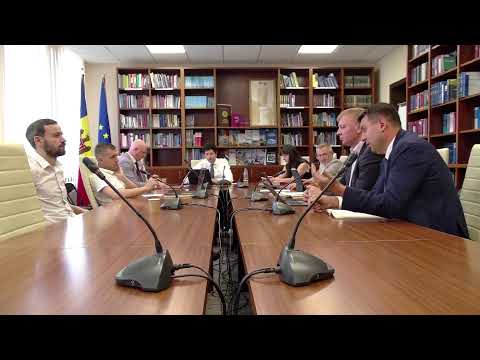
Rules and tools for verifying information, ensuring accuracyin investigative journalism, and avoiding legal risks, as well as methods for accessing information from various databases, were the main topics of a training session held on Friday, March 28. The event was organized by the Center for Investigative Journalism with the support of International Media Support (IMS) from Denmark for the Network of Investigative Journalists in Moldova.
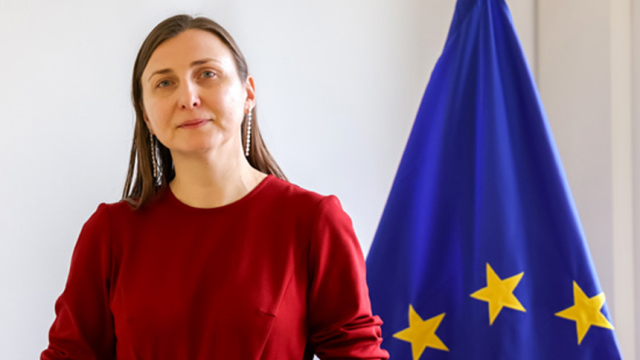
"Fact-checking is part of every journalist’s daily routine: verifying facts as they are discovered and then presenting them to the public. In investigative journalism, fact-checking is even more crucial, as it involves verifying sensitive information on complex topics such as corruption and criminal schemes. Sometimes, journalists need to go through large amounts of data, consult multiple databases, conduct cross-checks, or think creatively to find the necessary information. This is why it is essential for journalists to have the skills, knowledge, and tools to gather all the necessary evidence with precision for their investigative reports," said Cornelia Cozonac, President of the Center for Investigative Journalism, during the training’s opening session.
The training was led by expert Dumitru Lazur and lawyer Sergiu Bozianu.
According to expert Dumitru Lazur, verifying information through fact-checking is essential in journalism, whether by consulting additional sources or applying the highest fact-checking standards. "Some media organizations use the fact-checking standards of the Organized Crime and Corruption Reporting Project (OCCRP), where each sentence of a text is verified individually. It is not the easiest or most enjoyable work, but it ensures that the information in every sentence is backed by evidence," said the journalist. He emphasized that this is a collaborative process with the investigative reporter, who must provide proof for every claim.
Dumitru Lazur also highlighted the importance of verifying previously published information, as some media sources may contain inaccuracies, outdated facts, or misleading statements. He stressed the need to check databases when dealing with multiple individuals sharing the same name. Additionally, he pointed out that social media can serve as a hidden but valuable source for obtaining and verifying information.
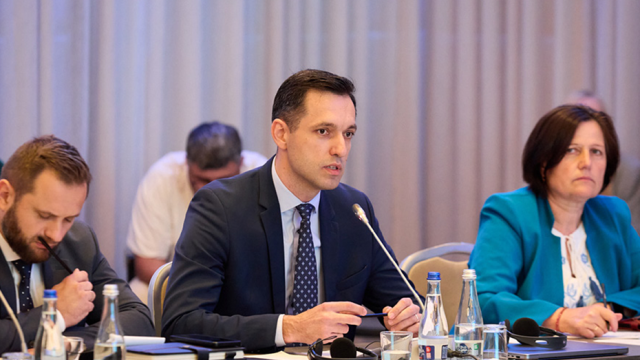
Lawyer Sergiu Bozianu explained that journalists are entitled to request any type of information from public authorities as long as they can justify the purpose of their inquiry. "A journalist has the right to access data because they are pursuing a journalistic goal, and this right is protected by law," he emphasized.
He also noted that the more influential the subject of an investigation, the higher the likelihood that they will hire a team of lawyers to scrutinize every word in an article. "In most cases, legal challenges focus not on the content itself, but on small details—minor inaccuracies, wording, incorrect dates, or misidentified job titles," the lawyer explained.
Sergiu Bozianu added that in his six years of collaboration with the Center for Investigative Journalism, there has never been a case where an investigation published by the center resulted in a legal loss.
Participants also discussed the provisions of the Personal Data Protection Law, which grants journalists the right to verify information that is in the public interest.
The trainers provided attendees with tools for repeated or cross-verification of data from public databases, as well as guidance on the steps journalists can take when authorities refuse or delay responses to information requests.
The online training session "Fact-Checking in Investigative Journalism" was conducted as part of the project "Quality Investigative Journalism in the Public Interest," implemented by the Center for Investigative Journalism with support from IMS. The event brought together 25 journalists from various media outlets across Moldova.

Textele de pe pagina web a Centrului de Investigații Jurnalistice www.anticoruptie.md sunt realizate de jurnaliști, cu respectarea normelor deontologice și sunt protejate de dreptul de autor. Preluarea textelor știrilor și a investigațiilor jurnalistice se realizează în limita maximă de 500 de semne. În mod obligatoriu, în cazul paginilor web (portaluri, agenții, instituţii media sau bloguri) trebuie indicat şi linkul direct la articolul preluat de pe www.anticoruptie.md în primul alineat, iar în cazul posturilor de radio și TV – se citează obligatoriu sursa. Preluarea integrală a textelor se poate realiza doar în condiţiile unui acord prealabil semnat cu Centrul de Investigații Jurnalistice.
Articole anterioare
.png)
.jpg)
.jpg)



Subscribe