
Energy (in)dependence of Ukraine and Moldova: After association with the EU
.png)
The desire to join the European Union, voiced by Ukraine and Moldova, set the agenda of the authorities, including the issue of the system of purchase and supply of natural gas. Nevertheless, the assessment of the situation to date, carried out by a group of journalists from Moldova and Ukraine, shows that the market of gas in both countries still has some problems, and carries the risk of corruption. Embezzlement of public funds, key intermediary firms of dubious reputation, monopoly - these are the main features of the gas market in the two post-Soviet countries.
"Moldova to Russia’s pocket". How it all started
"Moldova – to Russia's pocket" - in 2002 such headlines dazzled known Moldovan newspaper "Flux", talking about the alienation of a controlling stake shares "Moldovagaz" in favor of the Russian "Gazprom". In the gas sector, Moldova has lost part of the property in 1998, when the Russian giant has received 50% of the share capital of "Moldovagaz". With a view to the restructuring of Moldova's gas debt accumulated yet, from April 1998, the Moldovan Parliament adopted the Resolution № 1556 "On the reorganization and privatization of the gas in the Republic of Moldova", whereby half of the shares of the national supplier of gas was transferred to PJSC "Gazprom". This was possible due to the merger of JSC "Moldovagaz" and JSC "Gazsnabtransit".
Then, to find out the cost of the property of "Moldovagaz", it had to be done the assessment of the entire pipeline system. In accordance with Section 3 of the Government Decision № 1068, Department of State Property Management and Privatization planned to recalculate property Moldovan gas complex in 1999 through international audit companies. The main purpose of the revaluation was any changes in the share capital of JSC "Moldovagaz". Also re-evaluation could determine the correctness of transmission of "Moldovagaz" assets on account of debt. But this was not done until now. In other words, even today, it is unknown what should be the share of Moldova in "Moldovagaz" in fact.
It should be stressed that this situation is contrary to the law "On Foreign Investments" of the Republic of Moldova, namely article 9, paragraph 2, from 01.04.1992. According to the law, "all contributions to the charter capital of the enterprise with foreign investments are valued in accordance with the agreement between its founders on the basis of world market prices. Final assessment (not provisional, as was the case in reality) should be performed at the time of conclusion of the contract". A few years later, the Accounts Chamber audit has shown that the property value was understated then about twenty times. Subsequently, the data were presented in a report of IDIS Viitorul «Gas industry in Moldova: the burden of ignorance and error’s price", published in May 2007. Currently, PJSC "Gazprom" owns 50% of shares of "Moldovagaz", Public Property Agency under the Ministry of Economy of Moldova - 35.33% and the Property Management Committee of Transdniestria - 13.44%.
The Accounting Chamber and the activities of "Moldovagaz"
The last audit of the main supplier of gas to Moldova, carried out by the Accounting Chamber of the Republic, took place in 2000. Moreover, since 2009, the Accounting Chamber, even if wanted to, could not control the activities of JSC "Moldovagaz". The relevant law was amended in December 2008 and entered into force on 1 January 2009. It provides that the state can only perform an external audit of "operators, whose share capital is fully owned by the state, or the state's share in the capital of which exceeds 50%". This wording excludes companies such as «Moldovagaz», «Banca de Economii» and others, and, according to the vice-chairman of the Accounting Chamber Tudor Shoitu, allows poor management of state property, theft and misuse of budget funds.
"The authorized capital of one company is 100 million, of the other - 1.3 billion, as, for example,"Moldovagaz". Thus, we can check 60 million, but 600 million - have no right! Everything that happens in the energy sector, especially of "Moldovagaz", is alarming "- emphasizes Tudor Shoitu.
Only six years later, in the RM Parliament was proposed amendments to the Article № 28 of the Law on the Chamber of Accounts. The initiative, which was gathering dust on the shelves of the legislators, was represented by Deputies Iurie Leanca and Eugen Karpov, Stefan Cryange, and was approved by the Audit Chamber of the National Anti-Corruption Center. Only 17 March, 2016 amendments were adopted by deputies finally. After the changes take effect, the law will extend the powers of the state structures and the Audit Chamber can finally perform the external audit, enforce reduction in economic costs in companies, where the state has "at least 20% of the share capital".
On the other hand, there is another way in which the main supplier of natural gas in the Republic of Moldova can be checked by the state: "Such a control, Audit Chamber can do through NAER", - says Tudor Shoitu, noting that this initiative, however, was not supported and was even condemned by the European Energy Community. The reaction of EU representatives followed immediately after in the summer of 2015 the Chamber of Accounts in a formal conversation with NAER announced its intention to conduct an audit. As a result, after a short time, the European Energy Community started talking about a possible attack on the independence of the NAER (National Agency for Energy Regulation of the Republic of Moldova).
Such a reaction seems strange, since the Energy Community, which acts as a representative of the requirements and standards inherent in the entire European Union, does not see any problem in this situation in Romania. Thus, the Romanian Chamber of Accounts, for example, can perform procedures of Audit Authority for Energy Regulation, and that the EU is not perceived as an encroachment on the independence of the agency. In addition, such checks NAER in Romania, holds at least once a year, as well as in other autonomous public institutions, and the detected violations are always made public.
Officials report
The problems accumulated also in the gas sector of Ukraine. The main requirement of Euromaidan in Kyiv in 2013 was the signing of the Association with the European Union. Ukrainians have paid a high price for that association took place and came into effect. So on June 27, 2014 in Brussels, the President of Ukraine Petro Poroshenko has signed a historical document and completed years of the preparation and signing of the agreement. One of the priority items on the basis of which was developed and adopted strategy of development of Ukraine in 2020, is the issue related to energy trade, namely natural gas, crude oil and electricity. The association came into effect fully since January 1, 2016. But if the gas market in Ukraine has become transparent and less corrupt?
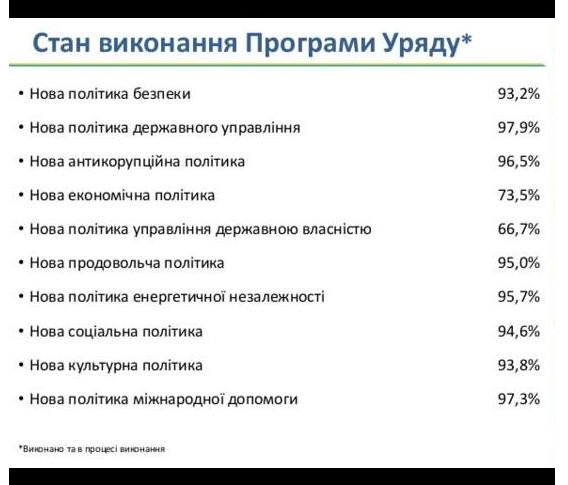
In its annual report on the work, published on December 15, 2015 on the official website of the Cabinet of Ministers, the then Prime Minister of Ukraine, Arseniy Yatseniuk praised the implementation of the new policy of energy independence by 95.7%. So, given that over the years has managed to increase gas supplies from Europe to 2.5 times, reduced supplies from the Russian Federation by 53%. Cabinet assures that eliminated intermediaries in the gas market: Ukraine buys gas directly from the EU partners, and from "Gazprom". Was reduced the amount of consumption of natural gas by 20.4% to 23.4 billion cubic meters. Significantly increased the volume of gas in storage facilities – on December 1, 2015 in Ukrainian underground storage facilities are of about 16.2 billion cubic meters of gas, which is more by 15.7% than last year. According to the results of 9 months of 2015 for the first time in 10 years, "Naftogaz Ukraine" has no damages. It was also carried out an independent audit of financial and economic activities of the organization. Also raised the rent on gas production and eliminated the so-called joint activities, used for the implementation of gas schemes.
At the end of 2015 Development Director of "Naftogaz Ukraine" Yury Vitrenko gave an interview to Ukrainian TV channels on the state of the gas market. In particular, Yury Vitrenko said that Ukraine managed to achieve independence from Russian gas over the past year and a half. "Now gas purchases are dictated depending on the price. If we, for example, see that the price of Russian gas is significantly lower than the European gas, we buy Russian gas. If we see that the price of Russian gas is higher or is on the same level as the European gas prices, we buy European gas ", - said Yury Vitrenko, noting that" Gazprom ", in spite of the many statements about discounts for the sister republic, actually supplied gas at a price significantly higher than for Europeans.
Yury Vitrenko also added that Ukraine remains dependent on imported gas, to reduce the dependence are developing options for increasing domestic production and reducing consumption, because Ukraine, according to the expert, "as well as any post-Soviet country badly energetically inefficient, we consume too much gas": "Our industry has significantly reduced gas consumption, largely because of the war. On the other hand, the population has reduced gas consumption due to the patriotism and because of economic considerations. To liberalize our market, we are moving gradually towards market prices for gas. Yes, this involves a significant increase in prices for the population, on the one hand, on the other, it leads to the fact that the subsidies that were previously hidden, provided in the form of discounts on gas, are now open and available to those who need it".
Ukraine: new rules - old schemes
In addition to actions of officials, in Ukraine were adopted a number of laws aimed at de-monopolization of the gas market, as required by the commitments, made after the signing of association with the EU. The government significantly increased its gas exports by reversal of Europe. For "Gazprom" has increased the price for the transit of the Ukrainian GTS. Controversial points of the gas contract in 2009 between Ukraine and Russia is considering by the Stockholm arbitration - the total amount of mutual claims is approaching the mark of 50 billion US dollars.
However, despite the cheerful reports of higher echelon officials, Ukrainian energy complex is still one of the most secretive and opaque. Currently in Ukraine there is a monopoly on the gas market, which is owned by "Naftogaz", which opens up great opportunities for the realization of corruption schemes. Monopoly is also the country's gas transportation system. Thus, in the opinion of the director of energy programs of the Center for World Economy and International Relations, National Academy of Sciences of Ukraine, ex-representative of "Naftogaz Ukraine" Valentyn Zemlyansky, globally in the country since the time of Maidan, the signing of the Association with the European Union, nothing has changed: the market is monopolized, and this is important for corruption - that is, if some company has agreed to approach the market with a key player "Naftogaz", then it will work, if does not agree, it will not work.
"Yes, we have adopted laws aimed at de-monopolization of the gas market and its liberalization, but so far it is only intention. Monopoly of "Naftogaz" is preserved, there is no market in the country. Market - this is when there is competition, and when there is a monopoly, it is not the market. Moreover in this situation the state is completely eliminated. Monopolists got complete freedom of action, backed also by the Memorandum of the IMF ", - stressed Valentyn Zemlyansky.
A former employee of "Ukrgasdobycha", analyst of consulting company "Nyufolk", Gennady Kobal says that in general the gas market of Ukraine today has a range of problems: "The government has made several steps that are not contributing to the openness and transparency of the market. For example, last winter, 150 largest private enterprises had to buy gas from "Naftogaz", which is a monopoly. It hit hard by the companies. After this decision was canceled. "Naftogaz" is the largest company in the gas market, the only one that buys gas from "Ukrgasdobycha". It turns out that one company buys gas, produces and transports ".
Monopoly = corruption
In our formal request to the company, "Naftogaz Ukraine" reported: in the middle of January 2016 the company contracted to 1.7 billion cubic meters of gas in five European companies by the EBRD loan. In December and January, the company conducted 27 procurement procedures, 17 were recognized conducted. Gas supplies are calculated to March 2016. The winners of the procurement procedures became Noble Clean Fuels Limited, Engie SA, Axpo Trading AG, E.ON Global Commodities SE and Eni trading & shipping S.p.A from among 11 suppliers, who have previously passed the pre-selection process by the EBRD standards. The main criterion, on the assertions of the representative of "Naftogaz" is the lowest price that ranged from 188 to 211 dollars per thousand cubic meters of gas. In addition, "Naftogaz" contracts and their own money to European companies, but the representative of the company did not provide details. The heating season 2015-2016 in Ukraine has passed without the purchase of gas from Russian "Gazprom".
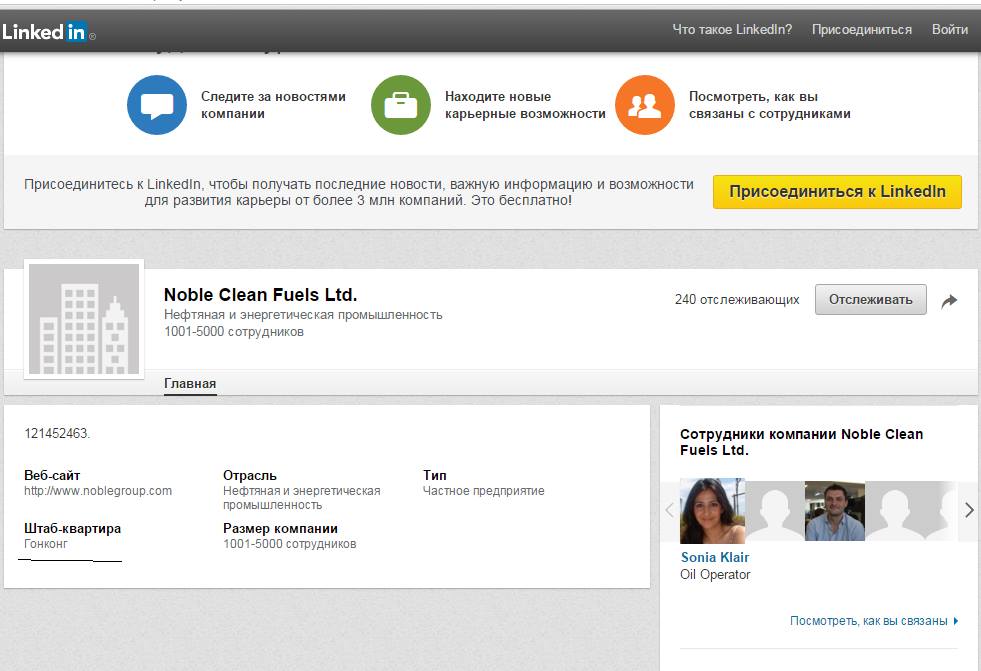
It should be noted that four of these companies are for a long time in the energy market in Europe, have a good reputation. But the company Noble Clean Fuels Limited is an offshore, registered in the UK, but the headquarters, according to an open database, is located in Hong Kong. But it's not only that. The company is a subsidiary of Hong Kong's major company Noble Group, which since 2008 has been working in Ukraine. A subsidiary of the company in Ukraine is also "Noble Resources Ukraine", which from 2008 to 2013, headed by the present MP from the "Samopomich" Ivan Miroshnychenko, as indicated in his official biography. His candidacy in December 2014 was lobbied for the post of Deputy Prime Minister by the former Prime Minister Arseniy Yatsenyuk, stressing that the key points of growth of the Ukrainian economy is the agricultural sector and the energy, and Miroshnychenko is suitable for the post of Deputy Prime Minister. And in early 2015, the company Noble Clean Fuels Limited becomes the supplier of reverse gas.
Another scandal with gas suppliers in Europe is associated with the company Trail Stone, which broke out after the performance of odious people's deputy of Ukraine Yulia Tymoshenko. So, in October 2015 with the Parliament rostrum leader of the "Batkivshchyna" said that Ukraine buys gas from company Trail Stone, at a bigger price than on the stock exchange: "I have now in the hands a document with stock quotes that with the advent of government-established company Trail Stone, which is represented by Ukrainian citizen Pavlo Levin, who has a direct relation to the leadership of" Naftogaz ". And the strange circumstance that this company sells imported gas in Ukraine is more expensive than the stock exchange quotations".
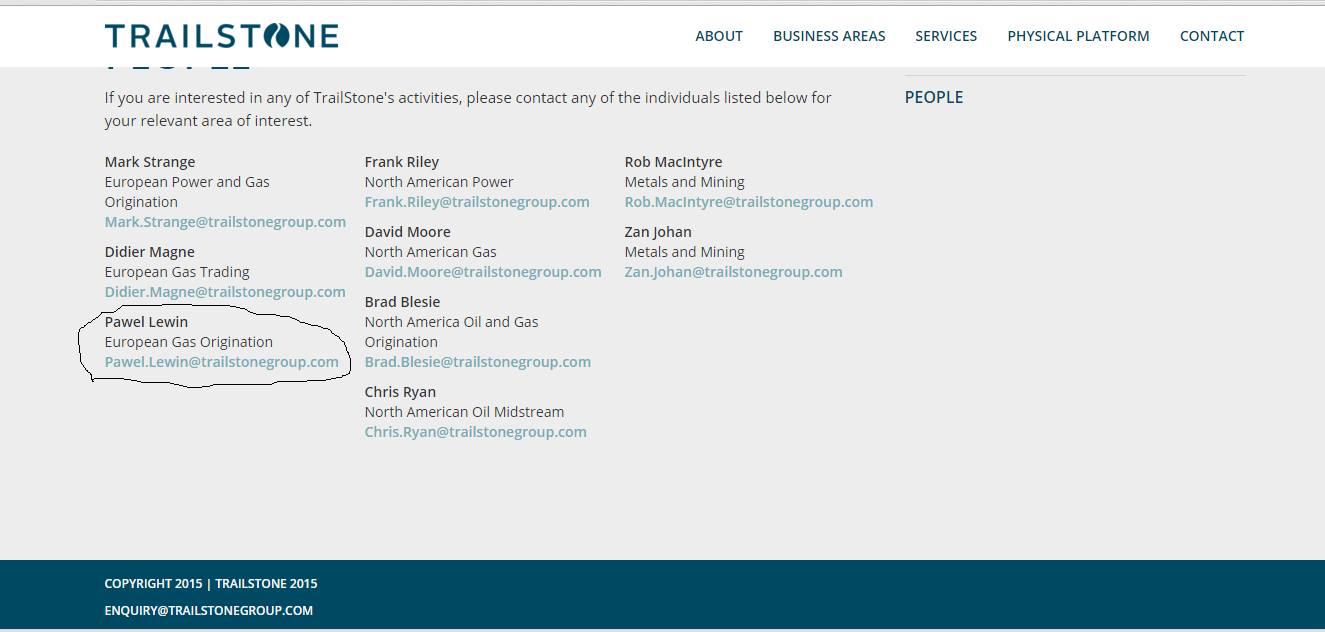
It should be noted that the company Trail Stone, which is a US company Riverstone Holdings LLC, was established in 2013, has offices in Berlin and London. Gas supplies to Ukraine are engaged in the German branch of the company. On the web-site of Trail Stone, in the list of contacts, indeed there is Pavlo Levin, whom we asked to comment on the statement of Yulia Tymoshenko, but he ignored the letter.
The fact that the company has a powerful lobby of the former Ukrainian Prime Minister and holds a leading position among suppliers of natural gas in Europe, became known last summer. So, after returning from an investment conference in Washington in July 2015, Yatsenyuk said: "In the energy sector also have signed a memorandum with the European division of the US Company Riverstone to increase purchase volumes of natural gas for the needs of Ukrainian industry and the needs of the Ukrainian economy".
Prior to that, the head of management of European integration of the Ministry of Energy and Mines Michael Bno-Ayriyan noted that TrailStone in the first quarter of 2015 was the third in terms of company-supplier of natural gas from Europe to Ukraine. "There may be gone some companies, but there is no market mechanism. First of all, you need to change the approach. It should work Antimonopoly Committee. "Naftogaz Ukraine", "Ukrtransgaz" are monopolists in the market. For a company to enter is needed to somehow transport gas, that is to bypass them is impossible. If European companies are complaining, it is possible that the mechanism will be changed "- sums up the lawyer Andriy Leshchenko.
Politics, populism and gas tariffs
Haven’t waited for de-monopolization of the market and consumers in Moldova. Another difficult issue is the topic of increase of tariffs for energy, which in both countries becomes the subject of controversy demagogic polemic of politicians. Thus, the increase in tariffs for natural gas for just one Moldovan ban, provide JSC "Moldovagaz" additional income of nearly three million lei annually. In these circumstances, the passions around the idea of changes in tariffs have always been extremely tense. The promise of lower tariffs could provide "political capital" of a party, while the increase, even justified, in a poor country, as a rule, is absolutely unpopular. This trick is widely used by the Moldovan politicians, who have repeatedly stated that in the talks with the representatives of "Gazprom" have made the price reduction. And it is during that time, as the largest supplier of natural gas shows in their reports that the formula for calculating the tariff for sale of gas to Moldova has not changed for over eight years. The price is calculated on a quarterly basis at a fixed algorithm, so that the reduction takes into account only the changes in the index of prices for diesel fuel and heating oil.
The latest report, published by "Gazprom", also shows that the price of imported natural gas to Moldova in the fourth quarter of 2015 was significantly lower than it was announced by the Ministry of Economy for the same period. The same applies to the average gas import price. So, while the Ministry of Economy announced the estimated cost of $ 204 per thousand cubic meters, the Russian giant's report shows that the import price in the fourth quarter of 2015, in fact, was $ 181.29. In turn, the Ministry of Economy says that the difference is due to the fact that, according to the contract with "Gazprom", the estimated price of gas is fixed quarterly January 1, April 1, July 1 and October 1. The press service of the Ministry of Economy said that the real price was 185.34 dollars in October, November - 183.97 and 184.31, US dollars per thousand cubic meters in December respectively. Currently, Moldova imports gas from Russia under a contract between "Moldovagaz" and "Gazprom" from December 29, 2006. Its validity is actually expired on December 31, 2011. Since then, the document periodically is simply prolonged.

Textele de pe pagina web a Centrului de Investigații Jurnalistice www.anticoruptie.md sunt realizate de jurnaliști, cu respectarea normelor deontologice și sunt protejate de dreptul de autor. Preluarea textelor știrilor și a investigațiilor jurnalistice se realizează în limita maximă de 500 de semne. În mod obligatoriu, în cazul paginilor web (portaluri, agenții, instituţii media sau bloguri) trebuie indicat şi linkul direct la articolul preluat de pe www.anticoruptie.md în primul alineat, iar în cazul posturilor de radio și TV – se citează obligatoriu sursa. Preluarea integrală a textelor se poate realiza doar în condiţiile unui acord prealabil semnat cu Centrul de Investigații Jurnalistice.
Previous articles
.jpg)
.jpg)
.jpg)




Subscribe