



Why Anonymity might be Moldova’s Best Weapon Against Corruption

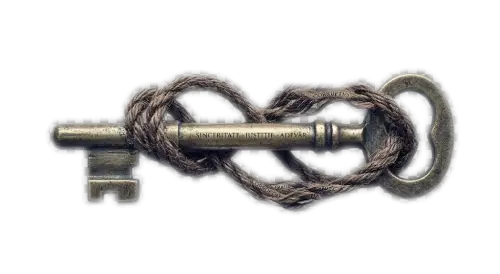
In the current climate of global surveillance and domestic instability, the debate over online anonymity has shifted from a technical niche to a democratic necessity. For a nation like the Republic of Moldova, currently embroiled in a systemic battle against corruption and "captured state" dynamics, the ability to speak without being seen is no longer just a preference - it is a lifeline for accountability.
The historical precedent for the power of anonymity is clear. Whether it was Edward Snowden’s 2013 exposure of mass surveillance via encrypted channels or Bradley Birkenfeld’s piercing of Swiss banking secrecy, which recovered over $16 billion for taxpayers, history shows that when power imbalances are extreme, the truth often only emerges through shadows. These whistleblowers relied on tools like Tor and end-to-end encryption to bypass the gatekeepers of information.
In Moldova, however, the gap between the need for anonymity and the ability to maintain it remains dangerously wide. While the 2026 National Action Plan for Journalist Safety acknowledges the vulnerabilities faced by those investigating high-level graft, the reality on the ground is stark. Investigative journalists face a barrage of "SLAPP" lawsuits (Strategic Lawsuits Against Public Participation) and pervasive digital tracking, a trend noted by both the European Parliament and local watchdog reports.
The central conflict lies in the delicate balance between journalistic deontology - the ethical duty to verify and provide context - and the absolute need for whistleblower safety. Moldovan law technically protects whistleblowers, but as noted by the Independent Anti-Corruption Advisory Committee (CCIA), these protections often fail in practice. When a source risks their life to expose "captured state" dynamics, the ethical scale must tip: safety must trump attribution. If a journalist cannot guarantee anonymity, they cannot guarantee the safety of their source.
This brings us to the "cybersecurity awareness bottleneck." Despite the courage of Moldova’s media, many newsrooms operate under a digital deficit. Without training in encryption, VPNs, and secure leak platforms, journalists unwittingly leave "digital breadcrumbs." As reports from the Public Media Alliance suggest, this lack of a toolkit doesn't just endanger individuals; it bottlenecks the entire anti-corruption movement. Every source that stays silent out of fear is a victory for the corrupt.
To move forward, we must stop viewing anonymity as a tool for the "shady" and start viewing it as a cornerstone of the "transparent." For Moldova to truly dismantle systemic corruption, three things must happen:
-
Investment in Digital Literacy: Journalists must be trained in cybersecurity as rigorously as they are in fact-checking.
-
Institutionalized Protection: Media outlets should adopt secure, anonymous drop-boxes to protect the metadata of those who come forward.
-
Legal Evolution: Our legal frameworks must evolve to recognize that in the digital age, the right to speak anonymously is an essential component of the right to free speech.
The fight against corruption in Moldova is not just a battle of laws and courts; it is a battle of information. By shielding those who speak the truth, we ensure that the truth eventually sets us free.

Textele de pe pagina web a Centrului de Investigații Jurnalistice www.anticoruptie.md sunt realizate de jurnaliști, cu respectarea normelor deontologice și sunt protejate de dreptul de autor. Preluarea textelor știrilor și a investigațiilor jurnalistice se realizează în limita maximă de 500 de semne. În mod obligatoriu, în cazul paginilor web (portaluri, agenții, instituţii media sau bloguri) trebuie indicat şi linkul direct la articolul preluat de pe www.anticoruptie.md în primul alineat, iar în cazul posturilor de radio și TV – se citează obligatoriu sursa. Preluarea integrală a textelor se poate realiza doar în condiţiile unui acord prealabil semnat cu Centrul de Investigații Jurnalistice.





Subscribe