
„Democratic” fund for energy efficiency
.jpg)
The Energy Efficiency Fund (FEE) was founded in summer,2012 to ensure efficient energy expenses by fundingsome localprojects of energy consumption reduction and use renewable energy. In the past three years, FEE approved funding worth nearly half of billion lei for thermal insulation, replacing windows and doors and installing public lighting in different settlements of the country. Most of this money was handed to settlements managed by democratic mayors. FEE is under the Ministry of Economy’s subordination that is managed by representatives of the same party. Fund’s politicization is not the only problem, say officials. A part of companies authorized to perform energy audit, without which you cannot get funding from the EEF are interconnected or affiliated to employees of the Fund or of the institutions subordinated to the Ministry of Economy. Revenues from audit obtained by these companies amount to several hundred thousand lei per month, say other auditors who complain of unfair competition. Economic unit who is currently managing businesses of the former Minister of Economy, Valeriu Lazar, has been the manager of this Fund for 3 years. The company was remunerated with about 145 000 lei per month.
One in three projects, accepted
In four years since set up, FEE has approved funding worth 417 million lei for projects. Most of the money was provided by the European Union, which announced that it is willing to allocate 40 million for energy efficiency projects implemented in Moldova. Finally, due to lack of absorption capacities of the Fund, only half of the amount was disbursed. The procedure for accessing grants from the FEE is a complicated one, say mayors who submitted 794 draft proposals, of which, only 262 were accepted by July 2016 (only one in three – n.r.), of which only 165 projects are submitted by local authorities. For example, to get funding for institution’s insulation, the municipalities must submit to the fund a project that contains 18 documents, of which 5 are specialized reports that can be issued by experts against payment.
In four years since set up, the Fund has allocated funding for projects proposed by public authorities in three large programs. Calls 1 and 3 refer to the thermal insulation of buildings, and Call 5 provides funding for public lighting. The Fund covers 70-80 percent of costs of works; the remaining money is contribution of the contracting authority.
“We have been trying for 2 years to get financing from the Fund. You need to bring one document or other. Preparation of the set of document is expensive. We paid almost a hundred thousand lei. I paid 60 thousand lei for auditing. Then, the rules have changed and new requirements appeared. We managed to get a project for thermal insulation of walls in the village school because I was persistent. Now, we want to try can get a grant for public lighting", says Valentin Gutan, mayor of Cricova town, municipality Chisinau.
Energy efficiency, on political criteria
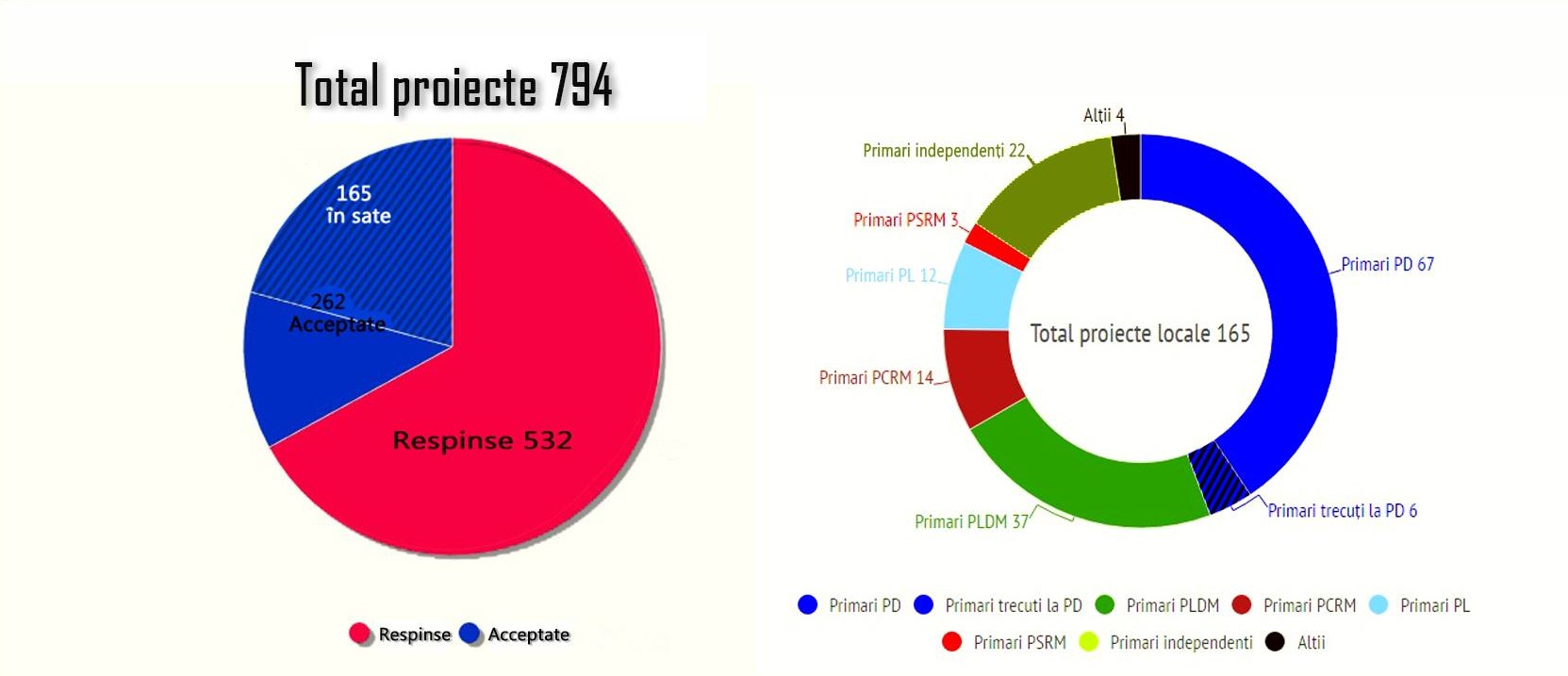
We analyzed 165 projects accepted for funding by FEE for local authorities in terms of political affiliation of mayor’s offices who have applied for funding. Thus, in 67 cases (40.6%), money for energy efficiency projects have reached settlements managed by democratic mayors and in six cases, the mayors who obtained projects from FEE joined the Democratic Party later.
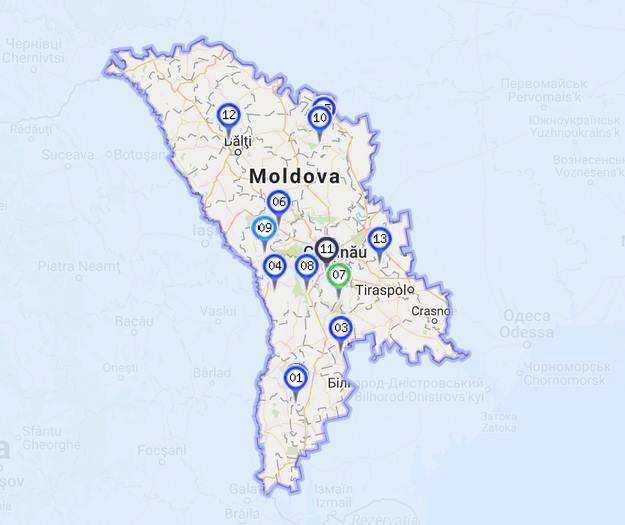
The situation is works in the case of the 6th Call for public lightning modernization. Out of 13 projects approved by FEE, eight cases concern the municipalities managed by representatives of the Democratic Party. As for villages Chioselia Mare and Frumusica, district Cahul, mayor Svetlana Cealicu, candidate of the Liberal Democratic Party in Moldova, backed earlier this year the liberal democratic MPs who formed the new parliamentary majority and voted with Government led by Pavel Filip.
In all, villages led by democratic mayors benefited from over 89 million lei in projects financed by FEE, which represents 42 percent of the total amount of 211 million lei, allocated by the Fund for energy efficiency projects implemented in villages.
Privileged settlements
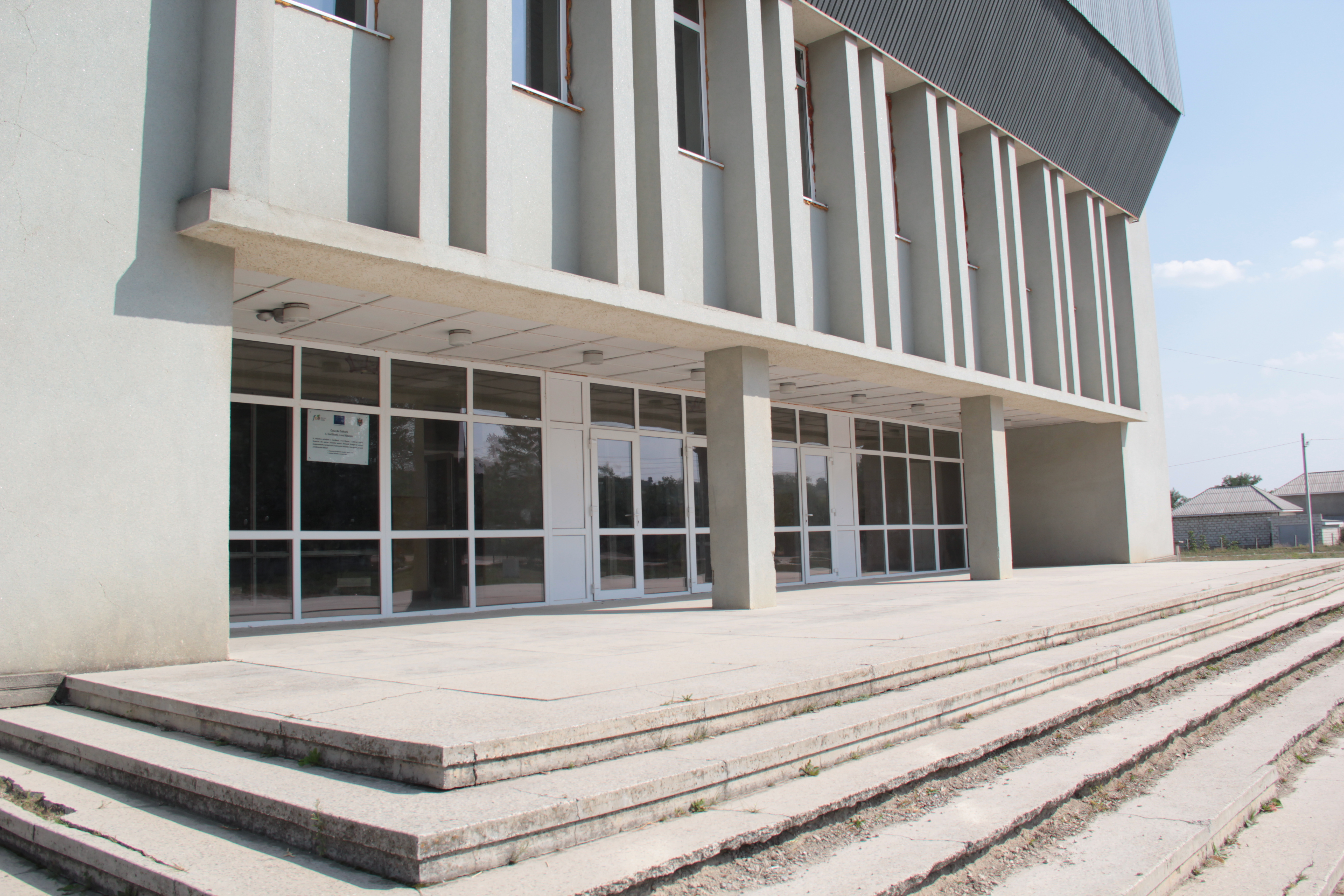
"There is no connection between the FEE's funding and political affiliation of mayors. I was in opposition and I worked with the Fund. We obtained financing projects before. I left the Liberal Democratic Party in Moldova and I joined the Democratic Party five months ago", said Anatolie Baciu, mayor of the village Corlateni, Rascani district, village that last year gained three projects funded by the FEE, very rare in practice of FEE. Two of the projects relateto thermal insulation of the Culture Houseand of the Lyceum “V. Dumbraveanu" in the village (funding contracts of 1.26 million lei each were approved on June 30, 2015 – n.r.), and the last agreement for street lighting system modernization, worth 631 000 lei was signed on 17 June current year, three months ago. Recently, the Mayor’s office organized a tender to start thermal insulation of lyceumin the village. The contract was signed with Beaux Com SRL in June, current year.
It is worth mentioning that 259 Mayor’s offices that have submitted one or more projects to FEE, did not receive any grant.
Large projects with little impact
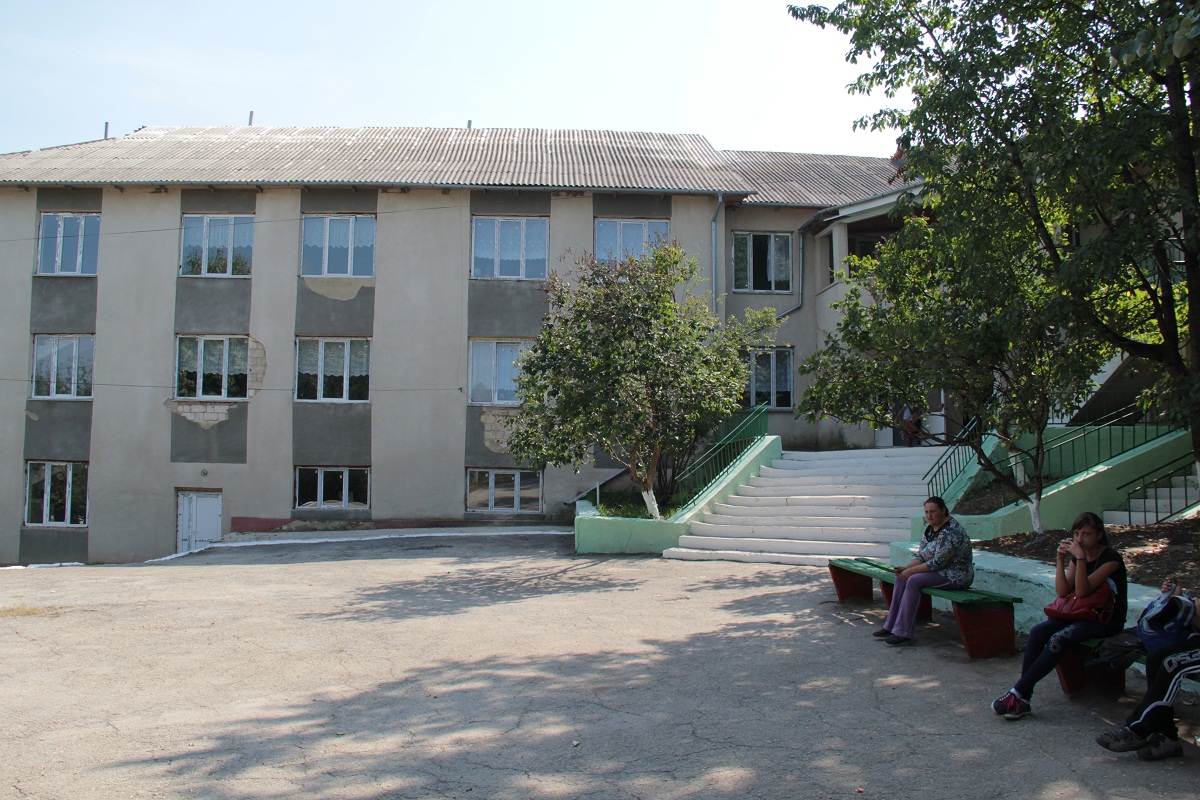
Though the competition to get funding from FEE is tough, there are cases in which the Fund decided to provide large sums for small institutions with a small number of beneficiaries. For example, a sum of 2 million lei was earmarked for thermal insulation of school-kindergarten in the village Bogzesti, Telenesti. According to data of the Ministry of Education, 72 pupils attend this institution. Local media writes that to prevent liquidation of the school-kindergarten, 30 of these children come by a minibus from the neighboring village Bahu, Calarasi district. The mayor of this village Vasile Ozun is the exponent of the Democratic Party.
Contacted by phone, a local representative has informed us that this is the second project from FEE awarded to village Bogzesti for thermal insulation of the local gymnasium. “Three years ago, we won a project to replace the windows and doors of the school, now we want to insulate walls. We have not started working yet", said the mayor. Ozun points out that the local gymnasium will work for many years and that's because in addition to the 72 students in the village, about 30 children come from Bahu. The official rejects that projects from FEE are awarded based on political criteria. "When I got the first project, I was a representative of communists. It is not about political criteria. If you work, you get the documents, you'll get funding", he said.
Also, the Fund rejected the project filed by mayor’s office in village Cuhurestii de Jos, Floresti, for thermal insulation of the gymnasium in the village, where 190 children study. Mayor of the village, Liberal-Democrat Victor Cretu applied twice with this project at FEE, but was refused.
Director of FEE Octavian Crestin says that there are documents confirming that the institution in Bogzesti will activate in the next 5 years. However, the payback period for energy efficiencyinvestment is seven years. "There are few similar cases. We have many projects in hospitals where the number of beneficiaries is much higher", is counter-argument of the official.
„It is not convenient to apply to this Fund”
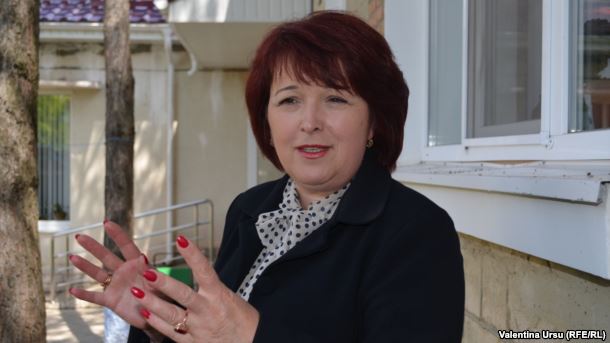
"We applied 3 times to the Fund for funding for thermal insulation of the music school in the settlement, the only one in the south of the country, and it was rejected”, says Tatiana Badan, mayor of village Selemet, district Cimislia. Also, she is president of Congress of Local Authorities from Moldova (CALM). The Mayor’s office spent more than 70 thousands lei for the application documents. "With this money we could start replacing the windows of the school. It's not convenient to apply to this fund because there is no transparency in the administration. It is fair to allocate money for projects where there is durability, but not for institutions that will be closed shortly. Many mayors have complained to me that FEE is politicized and the application process is very complicated ", said Badan.
Audit reports worth millions of leicovered in dust on shelves
Most objections of mayors concern the energy audit which is mandatory for all energy efficiency projects submitted to the Fund.
"I spent a lot of money for energy auditing. Authorized companies ask for 20 thousand lei up for the audit of a building. At first when the Fund was created, we were encouraged to submit many projects for funding. We hoped that we will get grants. There were hundreds of audits and eventually most projects were rejected. I spent money and documents are covered in dust on the shelves. We gave up on FEE. Now we are working with Japanese funds which are easier to access and more transparent", said Gheorghe Raileanu, mayor of Cimislia.
A simple calculation shows that at least 16 million lei (average price of an audit is about 30 thousand lei – n.r.) was spent for the audit reports compiled for the 532 financing projects rejected by the Fund in the last three years.

Textele de pe pagina web a Centrului de Investigații Jurnalistice www.anticoruptie.md sunt realizate de jurnaliști, cu respectarea normelor deontologice și sunt protejate de dreptul de autor. Preluarea textelor știrilor și a investigațiilor jurnalistice se realizează în limita maximă de 500 de semne. În mod obligatoriu, în cazul paginilor web (portaluri, agenții, instituţii media sau bloguri) trebuie indicat şi linkul direct la articolul preluat de pe www.anticoruptie.md în primul alineat, iar în cazul posturilor de radio și TV – se citează obligatoriu sursa. Preluarea integrală a textelor se poate realiza doar în condiţiile unui acord prealabil semnat cu Centrul de Investigații Jurnalistice.
Previous articles
.jpg)
.jpg)
.jpg)





Subscribe