

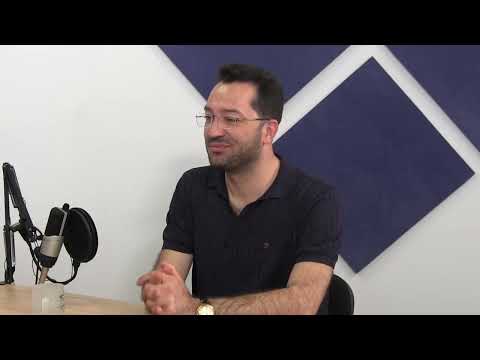
Igor Munteanu: “Without a depoliticised public administration and meritocracy, the Tofan Government’s reforms are doomed to fail.”
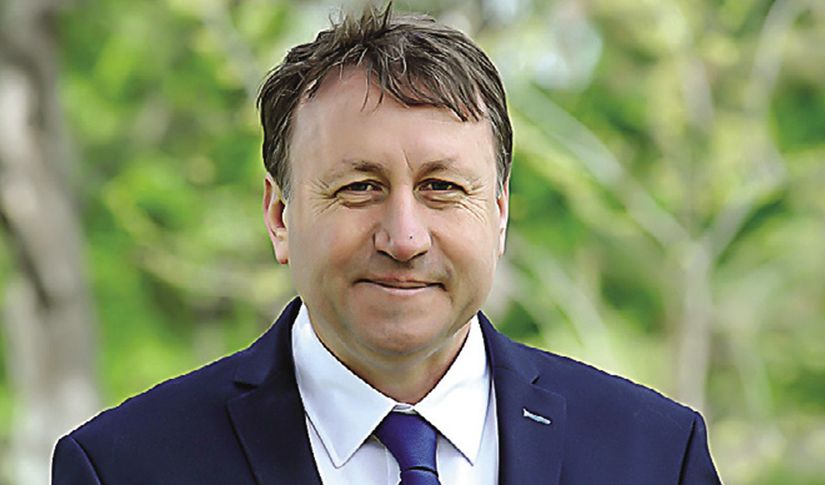
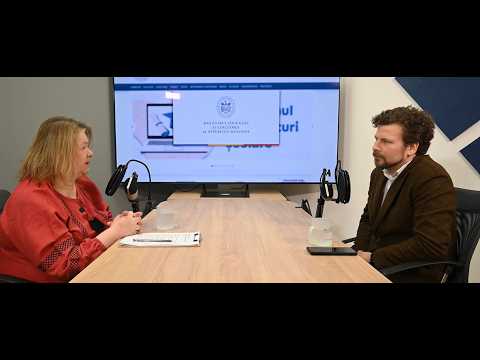
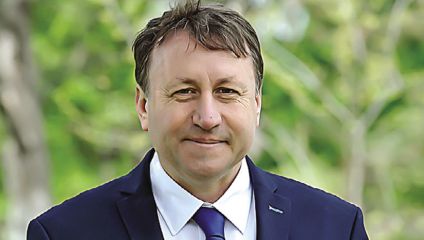
IDIS “Viitorul” expert and former Chairman of the Coalition for Unity and Well-being (CUB) Party, Igor Munteanu, gave an interview to the FES/APE Foreign Policy Bulletin, in which we discussed the key factors that will determine the success of the Tofan Government. According to him, the new government’s success will depend primarily on its ability to reform the public administration, depoliticise state institutions, support the business community, and strengthen the institutional capacity needed to seize the historic opportunity created by the Republic of Moldova’s accession negotiations with the European Union. We invite you to read the full interview:
Mr. Munteanu, the incoming Tofan Government takes office in a context marked by controversies over political appointments, conflicts of interest, and allegations of influence peddling. In your view, what should be the new Prime Minister’s first step during his first 100 days in office to demonstrate that he is changing not only the people in office, but also the rules of the game?
First of all, I believe there is a need for realistic expectations regarding Prime Minister Vasile Tofan. The reason is that he has inherited a government team that was already put together by the ruling party. In a sense, this team has been “leased” to him for the duration of his mandate. In other words, Mr. Tofan does not have a cabinet of his own, not even to the extent that his predecessor, Alexandru Munteanu, had when he took office. From this perspective, Mr. Tofan’s main strategic advantages over previous prime ministers lie in the innovative ideas he brings to government and in the more sophisticated network of contacts, connections, and experience he has built in the private sector. At the same time, I would point out that he benefits from a more favourable international context in his relations with the Republic of Moldova’s strategic partners than any of his predecessors. This is an advantage that could significantly facilitate his work.
Today, the Republic of Moldova is fully engaged in accession negotiations with the European Union. We are no longer in the position of merely standing before a half-open door, as was the case under the governments led by Natalia Gavrilița and Dorin Recean.
On the other hand, the scandals surrounding nepotism, influence peddling, and the appointment of individuals based on family ties or personal connections have created a highly toxic environment and have undermined the credibility of both the current and future actions of the Tofan Government.
It is essential that this background noise does not overshadow the Tofan Government’s ability to communicate effectively. Compared with previous prime ministers, including Dorin Recean and Natalia Gavrilița, Vasile Tofan articulates his intentions in a clearer, more coherent, and more technical manner.
There is, however, likely to be a gap between his communication style and the expectations of a large part of the public. Mr. Tofan communicates as a technocrat, whereas most citizens primarily expect social responses and political leadership from a prime minister. The transition from being a technocrat to becoming a political leader capable of directing and coordinating government action will, in all likelihood, take some time.
Can the Republic of Moldova move away from political appointments?
You have recently argued for the establishment of an independent recruitment commission for key positions in the public administration. Is the Republic of Moldova ready to move away from political control over appointments, or do you believe that any government, regardless of its public rhetoric, will ultimately be tempted to retain these levers of influence?
Vasile Tofan appears ready to promote a much more managerial style of governance – one that is more business-oriented and focused on evaluating the performance of public officials. He has already embraced this approach and publicly announced his intentions. Most likely, he will pursue this agenda resolutely, at least until he encounters resistance or friction, whether from members of his own Cabinet or from influential figures within PAS.
At the same time, the public’s expectations are, above all, moral in nature. The credibility of the current governing majority has already been damaged by mistrust and suspicion. Unless the government succeeds in restoring integrity and ethical standards in public office, it will be very difficult to convince citizens of the legitimacy of the strategic reforms that the Tofan Government intends to pursue.
That said, several of Vasile Tofan’s proposed initiatives have caught my attention and strike me as particularly important. First, he advocates a broad deregulation agenda and a much more business-friendly approach. This is not about rhetoric or public relations campaigns, but about introducing practical measures that address the day-to-day challenges faced by entrepreneurs in an environment where informal networks of influence and entrenched monopolistic interests continue to distort competition and hinder economic development.
His vision for foreign policy has also stood out. Vasi le Tofan is looking for more than diplomats focused on ceremonial representation; he wants economic diplomacy measured by tangible results. He expects Moldova’s embassies and diplomatic missions to play an active role in attracting foreign investment and promoting Moldovan exports.
Another noteworthy initiative is his vision of transforming the Republic of Moldova into a testing ground for artificial intelligence (AI), FinTech, GovTech, AgriTech, and other digital technologies. I believe the country has genuine potential in these areas, but until now no one has pursued them in a truly strategic manner.
The Prime Minister has also proposed establishing a Convergence Fund for Reintegration. This demonstrates his understanding that the reintegration process cannot move forward without the Government taking a direct and determined role in managing relations with the Transnistrian region. At the same time, he appears to recognise that the privileged relationships between certain vested interests and influential economic actors across the Nistru River must be addressed differently; otherwise, any serious discussion about reintegration will remain without meaningful results. In this respect, I see this as one of the positive elements of his agenda.
Overall, I do not believe that the initiatives put forward by Vasile Tofan are controversial in themselves. However, they become significantly more difficult to implement in the current environment, dominated by scandals involving influence peddling and other questionable practices that risk undermining both the Government’s credibility and its good intentions.
One example is the intention to accelerate the privatisation or stock market listing of state-owned assets and enterprises within a relatively short period of time. This is an extremely sensitive issue, and there is a real risk that part of the public will perceive such processes as favouritism or non-transparent asset sales, as long as state institutions have not yet earned the level of public trust and credibility that such reforms require.
EU Accession Negotiations and the Weaknesses of the Public Administration
The Republic of Moldova is entering a decisive stage in its accession negotiations with the European Union, and Brussels will assess not only the reforms adopted on paper, but also the state’s administrative capacity to implement them. How significant is the risk that a politicised public administration lacking merit-based recruitment could become the main obstacle to absorbing EU funds and fulfilling the country’s commitments to Brussels?
This is probably one of the greatest risks facing the Republic of Moldova today. The unprecedented openness demonstrated by the European institutions has created the impression that our country has already crossed the critical threshold in the accession process. In reality, however, the European institutions and Western capitals remain cautious and continue to monitor developments in the Republic of Moldova very closely.
The country is still under close scrutiny, and most of our vulnerabilities stem from the state’s limited capacity to manage public affairs effectively. These weaknesses concern the management of state-owned assets and enterprises, the quality of public services delivered to citizens, and sensitive areas such as public security, the protection of personal data, and access to justice –an area that continues to face significant challenges.
In my view, the Republic of Moldova cannot move forward without a profound and comprehensive reform of governance. Such reform should not be confined merely to cost optimisation, in line with the approach advocated by Vasile Tofan and inspired, to some extent, by the model promoted by Javier Milei. Rather, it should focus first and foremost on strengthening the state’s capacity to fulfil its core responsibilities and functions effectively. In other words, what Moldova needs is a genuine ‘statecraft’ reform – one aimed at building stronger governing capacity. Without such a transformation, the country will not be able to make meaningful progress under the current circumstances.
At present, we find ourselves in a paradoxical situation. Broadly speaking, the Government’s strategic direction is consistent with the declared objectives of the ruling party. However, it often conflicts with the informal interests of influential groups within that very party.
I say this unequivocally: this is not merely a socio logical phenomenon – it is a deeply political one. This reality helps explain, at least in part, both the constraints under which Vasile Tofan will have to operate and the risks that could ultimately affect the stability and longevity of his mandate.
Economic Growth or Institutional Reform?
You have argued that the current system rewards political loyalty rather than professional performance. Should the Tofan Government go as far as introducing fixed terms for the heads of public agencies and state-owned enterprises, with clear, objective, and narrowly defined grounds for dismissal, in order to protect them both from political interference and from changes in government?
I recently argued that the Republic of Moldova urgently needs a professional corps of managers to lead its public services, agencies, and state-owned enterprises. Achieving this objective will require a sustained effort to professionalise the public administration, as well as multidimensional integration with the standards and best practices of the Organisation for Economic Co-operation and Development (OECD) and the European institutions responsible for regulating and overseeing public services.
Over the coming months, until he is able to fully exercise his authority, Vasile Tofan will most likely be constrained by the existing balance of interests within the current Government. The interests and networks of influence associated with the current ministers did not disappear with the departure of the former Prime Minister; they remain closely linked to the fact that executive power continues to be exercised, without an alternative, by a single political party.
Against this backdrop, one of the first steps Vasile Tofan should take is to ensure that open, transparent, and merit-based competitions are organised for all senior positions in the public administration and across the government sector.
In addition, clear rules should be introduced governing remuneration and promotion in the civil ser vice, so that any salary increase is conditional upon performance evaluation. At the same time, much greater emphasis must be placed on strengthening the independence of the civil service and shielding it from excessive political interference, which has proven over recent years to be profoundly detrimental to the national interest.
Finally, Vasile Tofan should restore the Academy of Public Administration to its original mission as an institution dedicated to developing the capacities and professionalism of the public administration, rather than allowing it to remain merely an adjunct to the State University.
In my view, these are the four priority measures that Prime Minister Vasile Tofan should initiate without delay.
The Challenges and Constraints of Vasile Tofan’s Mandate
Will the success of Vasile Tofan’s term as Prime Minister be judged primarily by economic results or by his ability to reform the public administration? Put differently, what is more important for the Republic of Moldova over the next four years: a government that manages the economy effectively, or one that rebuilds state institutions on the basis of competence and integrity?
There can be no sustainable economic growth or long-term economic performance as long as the public administration functions primarily for its own institutional interests rather than in the service of citizens.
From this perspective, your question is, to some extent, rhetorical. That said, it is true that Vasile Tofan differs from most members of the current Government in that he has a much stronger managerial mindset.
He advocates a model based on a leaner and more efficient public administration, one driven by performance, greater reliance on private capital, and an accelerated process of digitalisation.
At the same time, he is likely to discover that the party he represents as Prime Minister – given that this is a government backed by PAS – prefers a gradual transition rather than disruptive change. This is also because the party itself does not yet appear ready to operate in an environment defined by stronger competition and stricter performance standards.
I hope that, as he embraces this strategic mission – which also marks a major turning point in his professional career – Vasile Tofan will understand that the parliamentary vote of confidence does not oblige him merely to defend the image of the governing party. It also gives him a responsibility to stand by the principles he set out when he assumed the office of Prime Minister.
For this reason, I do not believe he will have an easy tenure in government. On the contrary, I expect him to face numerous obstacles and unexpected challenges, including resistance from those who feel deeply threatened by a new style of governance built on performance and accountability.
Under these circumstances, he will need to broaden his base of support and build alliances across society. Indeed, he has already stated that he does not intend to be merely the Prime Minister of PAS, but the Prime Minister of all citizens of the Republic of Moldova.
The real test, however, will be whether these intentions are translated into concrete action. Only time will tell whether they become reality, and one can only wish him success in fulfilling this mandate.
Thank you!

Textele de pe pagina web a Centrului de Investigații Jurnalistice www.anticoruptie.md sunt realizate de jurnaliști, cu respectarea normelor deontologice și sunt protejate de dreptul de autor. Preluarea textelor știrilor și a investigațiilor jurnalistice se realizează în limita maximă de 500 de semne. În mod obligatoriu, în cazul paginilor web (portaluri, agenții, instituţii media sau bloguri) trebuie indicat şi linkul direct la articolul preluat de pe www.anticoruptie.md în primul alineat, iar în cazul posturilor de radio și TV – se citează obligatoriu sursa. Preluarea integrală a textelor se poate realiza doar în condiţiile unui acord prealabil semnat cu Centrul de Investigații Jurnalistice.
Previous articles






Subscribe