


Analysis// The Transnistrian Issue through the Lens of Russian “Sharp Power” in 2026
.png)
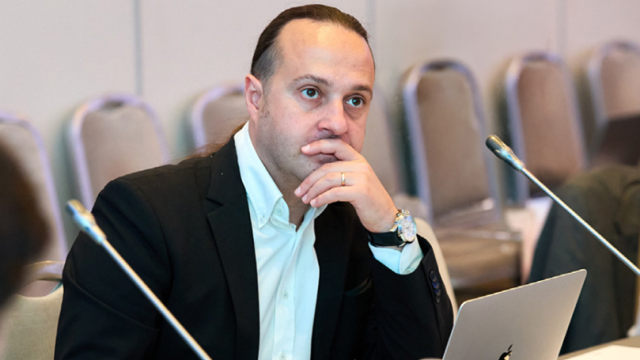
Analysis by Viorica Țîcu, Director of Strategic Programs at the European Institute of Political Studies of Moldova, published in the FES/APE foreign policy newsletter
In 2026, more than three decades after the outbreak of the 1992-armed conflict, the Transnistrian issue continues to represent a structural vulnerability for the national security of the Republic of Moldova. The current geopolitical context shows that the dynamics of this issue can no longer be explained exclusively through the classical concepts of hard power or soft power, revealing instead the perspective of sharp power instruments as an analytical lens for understanding its nature, functionality, and prospects within the regional security equation.
The concept of sharp power describes forms of political and strategic influence exercised by states with authoritarian political regimes— through subtle, asymmetric and often indirect means—aimed at affecting the decisions, perceptions, and political processes of other countries without the use of direct military force. The term was first used in 2017 in studies on invisible but effective power instruments used by states such as Russia and China to expand their influence globally.
The term was consolidated in a report published by the National Endowment for Democracy (NED), entitled “Sharp Power: Rising Authoritarian Influence.” The document responds to an increasingly evident observation in international politics: modern authoritarian states do not limit themselves to the traditional use of power to influence political processes and information environments in democratic states. The authors underline that, starting in the 2000s, authoritarian regimes, especially Russia and China, developed new systematic strategies, marking a fundamental shift in the way international influence is exercised. These strategies use subtle and asymmetric means to penetrate and manipulate the informational, political, and cultural environments of democratic societies. Their purpose is to create internal divisions, erode public trust in institutions, polarize opinions, and weaken democratic cohesion. Among the instruments used are disinformation, propaganda, financial support for favourable political actors, and media influence.
Forms of Action of Russian Sharp Power
In the case of the Russian Federation, sharp power manifests itself through a combination of informational actions, including modern technologies such as sophisticated mechanisms of automated disinformation and cyberattacks, aimed at undermining citizens’ sense of security and influencing the behaviour of leaders in targeted states. In this context, Russia projects its sharp power particularly toward countries in the post-Soviet space, focusing especially on supporting political actors favourable to Moscow’s interests, through whom it undermines trust in state institutions, shapes public opinion, and exploits existing social and political divisions.
In the context of the Republic of Moldova, the concept of sharp power provides an analytical framework for understanding the political pressures exerted by Moscow, the effect of the military presence on internal decisions and perceptions, and the way disinformation campaigns, based on manipulation and falsehoods, contribute to shaping political and geopolitical narratives and influencing public perceptions.
By maintaining indirect levers of control, Moscow can influence the political decisions of Chișinău without resorting to open military confrontation. Thus, sharp power becomes a foreign policy instrument adapted to contemporary realities, in which information warfare and the manipulation of perceptions play a central role. The Transnistrian issue fits almost perfectly into this logic.
Sharp Power and the Transnistrian Issue in 2026
In 2026, the Transnistrian issue can no longer be analyzed exclusively within the classical framework of “frozen conflicts” in the post Soviet space. Although the military dimension remains relevant, the current dynamics indicate a transformation of the region into an instrument of structural influence over the Republic of Moldova.
From this perspective, the conflict is not merely an unresolved territorial problem, but a strategic mechanism through which the Russian Federation maintains its capacity for indirect intervention in Chișinău’s political and geopolitical processes. Moscow seeks to preserve and amplify its political and military influence over the Republic of Moldova, including in the Transnistrian region, using not only classical instruments of power but also sophisticated mechanisms of narrative influence and diplomatic pressure. Moreover, in 2026, the dominant dimension of the Transnistrian issue is the narrative, informational-discursive one. The messages promoted by Russian officials aim to consolidate Moscow’s image as an indispensable actor in maintaining regional stability, while simultaneously shifting responsibility for the deadlock in negotiations onto the authorities of the Republic of Moldova.
In this framework are also included the recent, provocative and deeply politicized statements of Oleg Ozerov, the unaccredited Russian ambassador to Chișinău. His public interventions challenge the official positions of the Republic of Moldova and attempt to redefine the role of the Russian Federation in the region, presenting the Russian presence in Transnistria as legitimate and necessary for stability.
Through this discursive strategy, Moscow seeks to consolidate its self-proclaimed status as a “guarantor of peace” and to externalize responsibility for the stagnation of the settlement process, attributing it either to Chișinău or to the broader geopolitical context.
Shifting Discursive Emphases
This discursive reversal is essential: Russia does not appear as part of the problem, but as an indispensable actor in its resolution. By amplifying these messages in the media space, the objective is to shape public perception and maintain internal polarization favourable to Russian interests. This type of discourse is neither accidental nor purely bilateral. It reflects a coherent strategy of shaping the informational and political space of the Republic of Moldova.
The narratives promoted pursue several objectives simultaneously: influencing public debate, weakening the pro-European consensus, fuelling identity cleavages, and keeping the Transnistrian issue in a zone of strategic ambiguity favourable to Moscow. Ambiguity thus becomes a geopolitical resource.
For the year 2026, maintaining the conflict in a state of “controlled freezing” serves this strategy. A definitive settlement would diminish Moscow’s capacity to influence the geopolitical trajectory of the Republic of Moldova. By contrast, the perpetuation of an ambiguous status quo allows for the periodic activation of the Transnistrian issue as a lever of pressure—in electoral moments, in international negotiations, or in tense regional contexts. The conflict thus becomes a mechanism of structural constraint, limiting the decision-making autonomy of the Moldovan state.
By combining latent hard power with active sharp power, Russia maximizes the dependencies and vulnerabilities of the Republic of Moldova without resorting to open military escalation. Transnistria is no longer merely a disputed territory, but a strategic vector of Russian influence in Eastern Europe. In this logic, the Transnistrian issue in 2026 represents not only a regional security problem, but an instrument integrated into a broader strategy of geopolitical competition.
In conclusion, the analysis of the Transnistrian issue in 2026 must go beyond the static paradigm of a frozen conflict. The region represents an instrument of structural influence, integrated into a broader strategy of Russian sharp power. By combining latent military pressure with narrative and diplomatic interventions, Moscow seeks to maximize the dependencies and vulnerabilities of the Republic of Moldova, maintaining indirect control over its geopolitical developments.
In this sense, the Transnistrian issue fits into a logic of multidimensional influence: latent hard power, active sharp power, and soft power through diplomatic instrumentalization. Russia does not need to alter the military realities on the ground to achieve its objectives; it is sufficient to maintain a controlled level of uncertainty and to shape discursively the perception of the conflict. Therefore, the assessment of the perspective in 2026 depends on the capacity of the Republic of Moldova to transform the conflict from an instrument of external penetration into an effective process of reintegration.

Textele de pe pagina web a Centrului de Investigații Jurnalistice www.anticoruptie.md sunt realizate de jurnaliști, cu respectarea normelor deontologice și sunt protejate de dreptul de autor. Preluarea textelor știrilor și a investigațiilor jurnalistice se realizează în limita maximă de 500 de semne. În mod obligatoriu, în cazul paginilor web (portaluri, agenții, instituţii media sau bloguri) trebuie indicat şi linkul direct la articolul preluat de pe www.anticoruptie.md în primul alineat, iar în cazul posturilor de radio și TV – se citează obligatoriu sursa. Preluarea integrală a textelor se poate realiza doar în condiţiile unui acord prealabil semnat cu Centrul de Investigații Jurnalistice.
Previous articles








Subscribe