

Europe’s Door Has Opened. Why Chisinau Can No Longer Afford to Lose Momentum
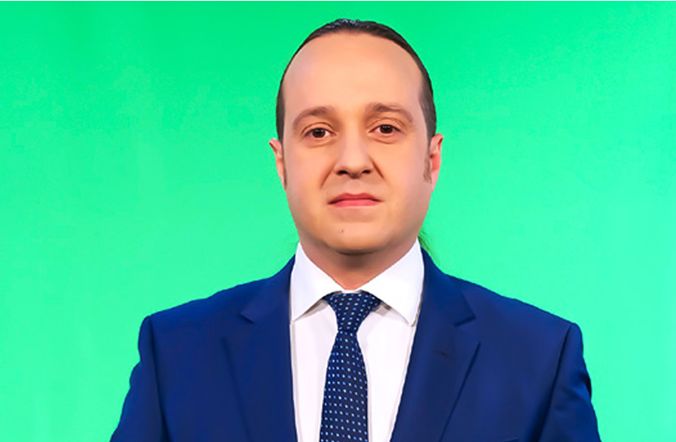
Editorial by de Madalin Necsutu, journalist at TVR Moldova, for FES/APE Foreign Policy Bulletin
On 15 June, the Republic of Moldova did not yet receive its ticket into the European Union. It received something more important for this stage of the process: access to the room where the real negotiations take place.
The opening of the first cluster, Fundamentals, shifts Moldova’s European dossier from solemn declarations to rigorous scrutiny, from applause to conditionality, from saying “we want to join the EU” to demonstrating “we are capable of functioning as a European state.”
This is not just another negotiating cluster. It is the backbone of the entire accession process. It covers the judiciary, fundamental rights, freedom and security, public procurement, statistics, financial control, democratic institutions, public administration, and a functioning market economy.
The Council of the European Union is explicit: this cluster is opened first and closed last, and the progress achieved here will determine the pace of the entire accession negotiation. In other words, Chișinău can no longer move forward on the strength of geopolitical enthusiasm alone. From now on, it will advance on the basis of evidence.
Brussels’ Promise: Funding, Market Access, and Security
The EU–Moldova Summit on 22 June came at exactly the right moment—just one week after the political decision to open the first negotiation cluster. Brussels’ message was carefully calibrated: Moldova belongs in Europe, but that place must be earned every day through reforms.
The European Union pledged political, economic, financial, technical, and strategic support, while also reaffirming its commitment to Moldova’s gradual integration into the EU Single Market wherever legislative alignment and administrative capacity make this possible.
Beyond the diplomatic language, the commitments were remarkably concrete. The Growth Plan worth up to Euro1.9 billion for the period 2025–2027 remains the EU’s main financial instrument for supporting Moldova. But the funding will not be disbursed out of goodwill—it is conditional on reforms. The European Commission has made it clear that financial assistance depends on the implementation of the reforms set out in the Reform Agenda, and that this package represents the largest financial support ever granted by the European Union to the Republic of Moldova.
At the summit, European leaders also highlighted tangible progress already achieved: Euro 504 million mobilized under the Growth Plan; a new Euro 232.7 million investment for the rehabilitation of the Porumbrei – Comrat road; the possibility of unlocking an additional Euro 523 million if the reforms due by the end of the year are completed; as well as Euro 120 million for security needs in 2026, Euro 11 million to strengthen resilience against hybrid threats, and Euro 17 million for border infrastructure.
To these commitments are added initiatives that directly affect citizens’ daily lives: Moldova’s integration into SEPA, the prospect of “roam like at home,” closer participation in Erasmus+, the expansion of DiscoverEU opportunities, enhanced cooperation in research, and investments in infrastructure, energy, digitalisation, education, and connectivity.
In other words, Brussels is seeking to demonstrate that EU accession is not merely a future treaty to be signed, but a process that can deliver tangible benefits well before membership. This is the political logic behind the current approach: European integration must become something citizens can experience before it is formally completed.
Reforms Are Not Won in PowerPoint Presentations
Chișinău has a strong hand to play. It has a reform agenda, European funding, political support, a favourable geopolitical context, and a population that has confirmed its European choice. The Growth Plan Reform Agenda sets out 56 reforms and 153 concrete measures, covering economic competitiveness, connectivity, economic governance, education and healthcare, the green transition, energy security, and the fundamentals of democratic governance.
But this is where the comfortable part ends.
Real reform begins where press releases are no longer enough. The judiciary remains the centre of gravity. Vetting can clean up the system, but it can also leave it depleted if there are not enough qualified professionals ready to replace those who leave. Anti-corruption efforts remain indispensable, but they cannot be reduced to statistics reported to Brussels. Local public administration must be reformed as well, but not through top down explanations filled with technical language that citizens in local communities struggle to understand.
Moldova is delivering results, but it still has substantial work ahead in the areas of justice, fiscal reform, anti-corruption, environmental policy, local public administration, and institutional implementation capacity. Above all, it must demonstrate that it is not only aligning its legislation with the EU acquis, but also implementing it effectively in practice.
That is the difference between a candidate country moving quickly and one that is genuinely prepared for membership.
Moldova and Ukraine: Politically Together, but Advancing on Their Own Merit
The Republic of Moldova and Ukraine entered this new phase of the accession process together. All EU Member States agreed to open the first negotiation cluster for both countries, sending a clear political message of strategic unity in the face of Russia’s war and ongoing hybrid threats.
From this point forward, however, the key principle is merit. The European Union has made it explicit that accession is a merit-based process, and that progress under the Fundamentals cluster will determine the overall pace of negotiations. This gives the Republic of Moldova a genuine opportunity to distinguish itself from Ukraine – not through political decoupling, not by abandoning Kyiv, and not through a cynical competition between two countries facing Russian pressure, but through stronger administrative performance and verifiable reform.
Moldova has certain advantages. As a smaller state, it can move institutions more quickly, adapt legislation faster, and demonstrate measurable results within a shorter timeframe. At the same time, it faces significant vulnerabilities: limited human resources, fragile institutions, domestic political polarisation, persistent Russian influence, weak local administrations, and continued dependence on the political support of all 27 EU Member States.
However technical the accession process may appear, every negotiating cluster is opened and closed within a political framework in which Member States retain decisive influence. Ultimately, the Accession Treaty will require unanimous approval by the Council of the European Union, the consent of the European Parliament, and ratification by every contracting Member State.
PAS’s Trap: Fast Reforms, Slow Consensus
This is where the domestic political challenge begins. PAS deserves credit for advancing Moldova’s European agenda at a pace that few thought possible. It has delivered on the technical side, pushed long-stagnant institutions into action, and kept the country firmly on its European course despite war in the region, disinformation, energy crises, and hybrid threats.
But speed comes at a price: the risk of turning EU accession into a partisan project.
Accession cannot become the property of PAS. Nor can it belong exclusively to the current pro-European government. It is the project of an entire society, and societies are not mobilised through government decisions alone. They are mobilised through public debate, clear communication, compromise, and inclusion. Reforms are undertaken for the people of the Republic of Moldova—not for European institutions—and the European integration agenda should never become the captive of a single political party.
The lesson is a simple one: Brussels can open doors, but ratification is also won through political relationships. At some point, Chisinau may need the support of a national parliament in an EU Member State where the key interlocutor is not a political ally of PAS, but rather a partner of an opposition party from Moldova. If all other domestic political actors are treated as mere spectators, Moldova risks undermining its own external political networks at a stage when they may prove decisive.
Realistic, but Not Inevitable
Is what the Republic of Moldova is aiming for realistic? Yes, if we are talking about rapid progress, gradual integration into the European Union, the opening of additional negotiating clusters, and the possibility of concluding accession negotiations within an ambitious timeframe. No, if we imagine that membership will come simply because Moldova is a victim of Russian pressure or because Brussels needs a success story in Eastern Europe.
Realism means something different. It means recognising that the European Union has made a major political investment in Moldova, but it will not overlook shortcomings in the areas of justice, corruption, public administration, or implementation capacity. It means understanding that a merit-based accession process may allow Moldova to distinguish itself from Ukraine, but it does not exempt the country from securing the political support of all 27 EU Member States. It also means recognising that European funding provides resources, not guarantees, and that the speed of PAS’s reforms must be matched by a much broader national conversation.
Moldova has entered the right corridor. It has political momentum from Brussels. It has substantial financial support on the table. It has a rare window of opportunity.
But that window will not remain open indefinitely.
From this point onward, accession will not be decided only in European capitals. It will also be determined in courtrooms, municipalities, ministries, villages, newsrooms, political parties, parliamentary committees, and above all, by the government’s ability to transform a race for rapid reforms into a genuine national project.
That is the real European test.

Textele de pe pagina web a Centrului de Investigații Jurnalistice www.anticoruptie.md sunt realizate de jurnaliști, cu respectarea normelor deontologice și sunt protejate de dreptul de autor. Preluarea textelor știrilor și a investigațiilor jurnalistice se realizează în limita maximă de 500 de semne. În mod obligatoriu, în cazul paginilor web (portaluri, agenții, instituţii media sau bloguri) trebuie indicat şi linkul direct la articolul preluat de pe www.anticoruptie.md în primul alineat, iar în cazul posturilor de radio și TV – se citează obligatoriu sursa. Preluarea integrală a textelor se poate realiza doar în condiţiile unui acord prealabil semnat cu Centrul de Investigații Jurnalistice.

.jpg)






Subscribe