

Moldova’s Growing Integration with the EU: Expanding Cooperation and a Stronger Focus on Security

Analysis by Denis Cenusa, associate expert with Expert-Grup for FES/APE Foreign Policy Bulletin
After nearly two years of waiting, on 15 June the European Union announced that the first accession negotiation cluster – the Fundamentals cluster –would be opened during the summer. As is customary in the EU enlargement process, this cluster is opened before all others and remains open until the very end of the negotiations, serving as the principal benchmark for monitoring a candidate country’s progress.
From this point onward, the EU’s assessment will focus primarily on two critical areas: the functioning of the judiciary and the protection of fundamental rights. Only after the remaining five negotiation clusters have been successfully completed –and provided there are no setbacks, reversals, or instances of backsliding –will the Fundamentals cluster be reassessed to determine Moldova’s overall readiness for EU membership.
Alongside the deepening accession process, Moldova and the European Union continue to attach high priority to political dialogue at the highest level through their annual bilateral summit. Although there was no technical necessity to do so, Brussels and Chisinau chose to hold this year’s summit in Brussels just one week after the political decision to launch negotiations under the first cluster. Politically, the summit reinforced the perception that this latest breakthrough in EU–Moldova relations was closely associated with President Maia Sandu and the pro-European government in Chisinau. Symbolically, it marked the removal of the final political obstacles preventing the formal advancement of the accession negotiations.
The summit also carried important domestic political significance. It reinforced the government’s strategic agenda and its political narrative of achieving EU membership by 2030, while strengthening the credibility of the country’s European course ahead of the local elections scheduled for 2027. Much as the EU–Moldova Summit of July 2025 had electoral implications by strengthening the governing party ahead of the parliamentary elections that October –widely regarded as decisive for preserving Moldova’s European trajectory – the June 2026 summit likewise served to reaffirm the political legitimacy of the country’s European integration agenda.
Accession Negotiations: The EU’s Official Entry into Moldova’s Political Landscape
The official announcement on the launch of accession negotiations had been expected following the political change in Hungary after the parliamentary elections in April. The removal of Prime Minister Viktor Orbán’s veto on Ukraine also opened the door for Moldova, which remains linked to Ukraine’s accession trajectory.
Five key policy areas are covered by the first negotiation cluster: the judiciary and fundamental rights (Chapter 23), justice, freedom and security (Chapter 24), public procurement (Chapter 5), statistics (Chapter 18), and financial control (Chapter 32). Most of these areas have already undergone an intensive process of Europeanisation during the twelve years of implementation of the EU–Moldova Association Agreement.
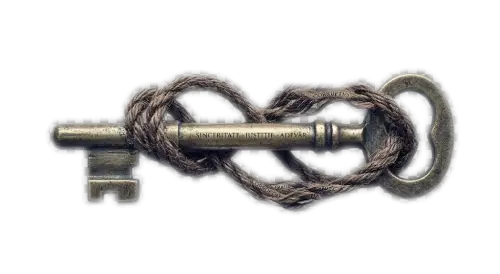
Nevertheless, the accession negotiations have not yet entered a fully operational phase, as Hungary continues to raise objections, requesting the removal of the wording “as soon as possible” in relation to Ukraine’s negotiations. In practical terms, Moldova’s door to accession still has a lock that can only be opened with a Ukrainian key.
For this reason, although the European Union has already established the benchmarks that will guide future assessments, they will only be fully applied once the remaining political obstacles are overcome. Progress in these areas will be evaluated against a set of horizontal criteria, including institutional capacity, implementation mechanisms, and policy coordination.
Beyond these technical aspects—which are relatively easy to measure—other dimensions, such as judicial independence or the quality of anti corruption policies, are inherently political. They are therefore more susceptible to politicisation and may be interpreted subjectively, both in Chisinau and in Brussels.
The accession negotiation phase places the European Union in a more delicate position than the Moldovan authorities. While Chisinau may be tempted to overstate the results of certain reforms, the EU is expected to assess progress strictly on the basis of merit. If it is perceived as favouring the government by issuing overly positive evaluations, its own credibility will be called into question. As a result, the EU’s reputation will increasingly become linked to the actual performance of Moldova’s reform process.
At the same time, the Moldovan authorities are likely to invoke the EU more frequently when justifying major reforms –from the external evaluation of judges and prosecutors to fiscal and public administration reforms. Greater transparency and clarity in the accession dialogue may therefore create a temptation to shift all or part of the political responsibility for the quality of these reforms onto Brussels. As the European Union consolidates its role as the external authority validating Moldova’s reform efforts, the accession process will inevitably generate reputational costs – and political accountability for both sides.
The Second EU–Moldova Summit: Pro-Reform Optimism and Financial Support
Launched in July 2025, the bilateral EU–Moldova Summit has become the highest-level platform for political engagement between the two sides. Its establishment reflects the high degree of trust that continues to characterize relations between Chisinau and Brussels. The second summit, held in Brussels in June 2026, built on the agenda and political momentum established one year earlier.
First and foremost, the European Union reaffirmed its commitment to supporting Moldova through the Euro 1.9 billion EU Growth Plan. At the same time, the allocation of financial assistance is becoming increasingly strategic, with funding directed toward infrastructure projects capable of delivering tangible social benefits. The construction of a regional hospital in Balti and the modernization of Chisinau’s district heating system are two concrete examples of investments with a direct impact on citizens’ quality of life.
The EU also recognizes that expanding the number of beneficiaries of European grants and loans contributes to strengthening public support for Moldova’s pro-European course and helps consolidate the country’s reform trajectory.
Another key dimension highlighted during the summit was security cooperation, with particular emphasis on countering hybrid threats.
The Joint Declaration contains 21 references to security, underscoring the growing prominence of this area within the bilateral relationship— even surpassing direct references to economic cooperation. In this context, the EU reaffirmed its support for the European Union Partnership Mission in Moldova (EUPM Moldova), for which Euro 197 million has already been allocated.
The Mission has become a strategic instrument for assisting the Moldovan authorities in countering hybrid threats, safeguarding the integrity of electoral processes, and strengthening the resilience of the country’s digital infrastructure. The security dimension of EU–Moldova cooperation is also expanding through Moldova’s gradual participation in the European Union Defence Innovation Scheme (EUDIS), as well as in the EU’s space programmes, including Copernicus for Earth observation and Galileo for satellite navigation.
The summit also reviewed opportunities for deeper sectoral cooperation in transport, energy, innovation, and the business environment. At the same time, there is a clear trend toward broadening the institutional architecture of EU Moldova relations through the establishment of new sectoral dialogue platforms, including in areas such as labour and agriculture.
One area that the European Union could not overlook is the rule of law, which lies at the heart of the Fundamentals cluster that will frame the accession negotiations. Although Brussels continues to acknowledge progress in this politically sensitive field, some problematic aspects receive comparatively less attention. Existing shortcomings are reflected, among other sources, in the latest opinions of the Venice Commission, which has recommended that the evaluation of judges include a balanced assessment of their professional performance, alongside appropriate remedial mechanisms for those who do not pass the financial integrity assessment.
In lieu of conclusion
The launch of the accession negotiations, together with the outcomes of the EU–Moldova Summit, demonstrates that bilateral relations are entering a new phase, one characterized by a clearer and deeper political and public policy dimension.
The European Union is prepared to deepen Moldova’s European integration on the path toward membership by expanding the range of policy areas in which technical dialogue with Chisinau becomes just as important as political engagement. At the same time, as the accession process advances, the EU is becoming increasingly involved in Moldova’s domestic political and reform agenda. This closer engagement also makes Brussels more vulnerable to attempts to shift responsibility for shortcomings or failures in Moldova’s reform process onto the European Union itself.

Textele de pe pagina web a Centrului de Investigații Jurnalistice www.anticoruptie.md sunt realizate de jurnaliști, cu respectarea normelor deontologice și sunt protejate de dreptul de autor. Preluarea textelor știrilor și a investigațiilor jurnalistice se realizează în limita maximă de 500 de semne. În mod obligatoriu, în cazul paginilor web (portaluri, agenții, instituţii media sau bloguri) trebuie indicat şi linkul direct la articolul preluat de pe www.anticoruptie.md în primul alineat, iar în cazul posturilor de radio și TV – se citează obligatoriu sursa. Preluarea integrală a textelor se poate realiza doar în condiţiile unui acord prealabil semnat cu Centrul de Investigații Jurnalistice.

.jpg)






Subscribe