
Editorial// The Tofan Government: Between Ambition, Purpose, and Seizing Opportunities
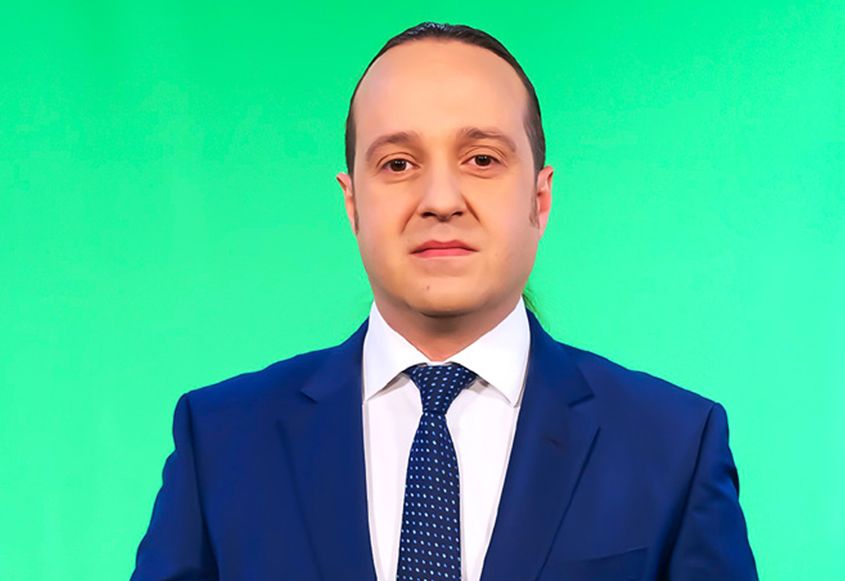
Editorial by Mădălin Necșuțu, Journalist, TVR Moldova for the FES/APE Foreign Policy Bulletin
There are moments in a nation’s history when political time begins to move at a different pace. There is no longer the luxury of years to experiment, nor the time for reforms that are launched only to be abandoned halfway. The Republic of Moldova has reached precisely such a moment. With the appointment of the Government led by Vasile Tofan, the country is entering what is likely to be the most challenging phase since obtaining EU candidate status.
Until now, Chișinău has been negotiating the opening of the door. From this point forward, it must demonstrate that it is capable of managing the European house. The difference is profound. Brussels will no longer assess only the laws that have been adopted or the political rhetoric surrounding European integration. It will assess the state’s administrative capacity. It will examine whether ministries function effectively, whether public institutions deliver results, whether EU funds are managed properly, and whether the public administration is capable of implementing reforms without being paralysed by political interests or informal networks of influence.
This is where the real challenge for the Tofan Government begins.
The Reform That Can No Longer Be Postponed
In recent weeks, the Republic of Moldova has been shaken by a series of scandals that have exposed long-standing weaknesses within the public administration: controversial appointments, allegations of influence peddling, difficult-to explain wealth, institutions turned into administrative fiefdoms, and an organisational culture in which political loyalty has too often outweighed professional competence.
These scandals are not merely a public relations problem. They strike at the very credibility of the state. And without credibility, no reform can be sustained long enough to produce meaningful results.
For this reason, the Tofan Government’s first major priority is neither fiscal reform, nor attracting investment, nor even accelerating the country’s EU accession negotiations. Its first and most urgent reform must be the reform of the public administration. It is not a spectacular reform that generates headlines or wins votes overnight. Yet without it, all other reforms risk remaining little more than PowerPoint presentations.
The Prime Minister has spoken about reducing waste, streamlining the state apparatus, advancing digitalisation, and introducing performance-based evaluation. These are the right objectives. The challenge, however, is that every one of these measures will directly confront the very mechanisms through which the public administration has operated for years. They will affect vested interests, dismantle long-standing privileges, and inevitably provoke resistance. It is precisely this resistance that will become the real test of the new Government.
The Political Costs PAS Will Have to Bear
In politics, there are popular reforms and there are necessary reforms. Rarely do the two coincide. If the Tofan Government follows through with restructuring public institutions, limiting unjustified bonuses, eliminating artificially created positions, introducing performance-based evaluations, and depoliticising the public administration, electoral costs will be inevitable.
There will be dissatisfied groups, there will be protests, and there will be disinformation campaigns. Most likely, part of these political costs will be borne by PAS, the party holding the parliamentary majority. Paradoxically, the success of the reform depends precisely on the governing party’s willingness to accept short-term electoral losses in exchange for long-term institutional gains. This is the difference between a government focused solely on the next election and one that seeks to change the rules of the game.
Moreover, Vasile Tofan comes from the private sector, where performance is measured by results rather than by political balancing acts. Public administration, however, operates according to a different set of rules. This raises the essential question: how much room for manoeuvre will the new Prime Minister actually have?
Even the best ideas cannot bring about real change if every major decision has to be negotiated with networks of influence, entrenched administrative interests, or electoral calculations. The answer to this question will determine not only the success of the Tofan Government, but also the Republic of Moldova’s ability to turn the current European opportunity into an irreversible process.
European Integration Begins in the Ministries, Not in Brussels
There is a natural tendency to view accession to the European Union primarily as a diplomatic process. In reality, diplomacy is only the tip of the iceberg. Genuine accession begins in every ministry, every public agency, and with every civil servant responsible for translating European directives into public policies and efficient services for citizens. It also requires a sense of purpose and professional motivation among civil servants—one that fosters commitment, ownership, and job satisfaction.
Until now, the Republic of Moldova has benefited from unprecedented political support from Brussels. Never in its modern history has there been such a strong convergence between the political will of the European Union and the aspirations of a majority of Moldovan society. Yet this window of opportunity will not remain open indefinitely. The European Union does not admit countries on the basis of enthusiasm; it admits them on the basis of results. And results require a capable public administration, a functioning judiciary, independent institutions, and the capacity to absorb billions of euros without those resources being wasted or captured by vested interests.
Over the next two to three years, the Tofan Government will be judged less by its press conferences and more by the number of kilometres of roads built with European funding, the projects delivered on time, and the reforms that produce measurable results. That is the difference between symbolic European integration and genuine European integration.
Reintegration Can No Longer Be Treated Separately from European Integration
Another major shift in thinking concerns the Transnistrian issue. For more than three decades, Chișinău has treated reintegration and European integration as two parallel processes. Today, however, the two have become inseparable. The Transnistrian region exports most of its goods to the Euro pean Union, relies on the Republic of Moldova’s energy and transport infrastructure, and is economically more dependent than ever on the European market. At the same time, the political leadership in Tiraspol continues to base its legitimacy on support from the Russian Federation and on blocking any meaningful political progress.
The Tofan Government appears to understand that this contradiction cannot continue indefinitely. As the Republic of Moldova moves closer to EU membership, reintegration can no longer remain merely a policy portfolio managed by the Bureau for Reintegration Policies. It must evolve into a com prehensive economic, institutional, and administrative project.
Reintegration will require far more than negotiations and political statements. It will depend on investment, infrastructure, connectivity, energy, public services, and common rules. Ultimately, reintegration will be driven by the development gap between the two banks of the Nistru River –not by sterile face-to-face meetings or negotiations conducted in one format or another.
The Greatest Challenge Does Not Come from the Opposition
Many believe that the Tofan Government’s main adversary will be the pro-Russian opposition. That is only part of the picture. The most difficult battle will take place within the administrative and political system itself. Every technocratic prime minister quickly discovers that reforms are not obstructed only by political opponents, but also by institutional inertia, vested interests, and bureaucratic habits that have been entrenched over many years.
This inevitably invites comparisons with former Prime Minister Alexandru Munteanu. Beyond the differences in style and vision, the fundamental question remains the same: how much real autonomy does a prime minister have in a government backed by a strong parliamentary majority? Can Vasile Tofan choose his own team? Can he change rules that affect deeply entrenched interests? Can he say “no” when the pressure comes from within the very coalition that supports him?
The answers to these questions will determine the success of his mandate far more than any economic indicator.
The First Six Months Will Shape the Next Four Years
In politics, there is a simple rule: the longer difficult reforms are postponed, the harder they become to implement. The first months of the Tofan Government will likely represent the only period during which sufficient political capital exists to undertake structural reforms. After that, electoral calculations, bureaucratic resistance, and the temptation of political compromise will inevitably begin to prevail.
If the new Government succeeds in professionalising the civil service, reducing political influence over public institutions, accelerating digitalisation, encouraging investment, and transforming diplomacy into an instrument of economic development, the Republic of Moldova could enter an entirely new phase of its development. If, however, reforms are diluted by compromises and change amounts to little more than replacing one set of officials with another, the current window of opportunity risks being squandered.
The Tofan Government is not simply another cabinet of ministers. It is the first government that must demonstrate that the Republic of Moldova is capable of functioning as a future member state of the European Union. That is the true significance of its mandate. And the time available to make that case is measured not in years, but in months.

Textele de pe pagina web a Centrului de Investigații Jurnalistice www.anticoruptie.md sunt realizate de jurnaliști, cu respectarea normelor deontologice și sunt protejate de dreptul de autor. Preluarea textelor știrilor și a investigațiilor jurnalistice se realizează în limita maximă de 500 de semne. În mod obligatoriu, în cazul paginilor web (portaluri, agenții, instituţii media sau bloguri) trebuie indicat şi linkul direct la articolul preluat de pe www.anticoruptie.md în primul alineat, iar în cazul posturilor de radio și TV – se citează obligatoriu sursa. Preluarea integrală a textelor se poate realiza doar în condiţiile unui acord prealabil semnat cu Centrul de Investigații Jurnalistice.
Previous articles






Subscribe